Cindy Goldrich on Helping Kids with ADHD Thrive—Without Losing Yourself
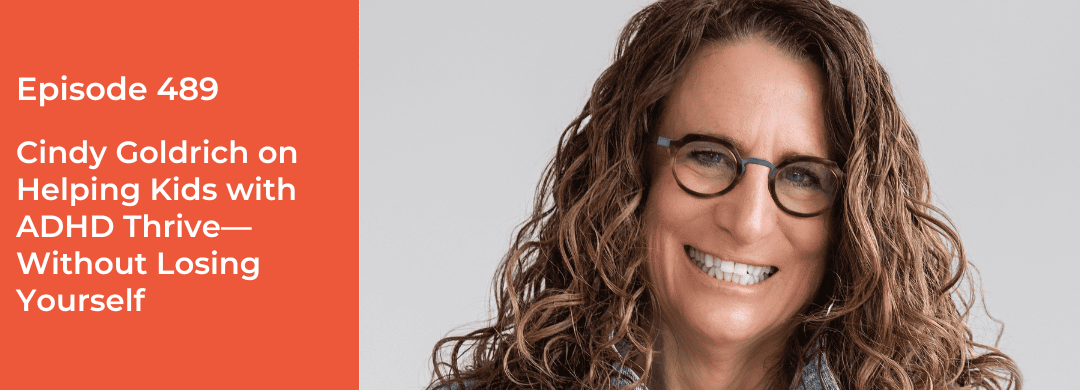
This episode digs into the evolving understanding of ADHD and what it really means to parent with collaboration, connection, and support at the center. My guest is Cindy Goldrich, an internationally recognized expert in ADHD and executive function support and the author of 8 Keys to Parenting Kids & Teens with ADHD, a compassionate, research-informed guide that she’s just updated for today’s families. In our conversation, Cindy and I talk about why traditional approaches to ADHD often fall short and how parents can shift from managing behavior to building skills and connection. We also explore the challenges so many families face, what kids with ADHD are actually communicating, and practical, supportive strategies parents can start using right away.
Cindy’s got a free download for Tilt listeners — grab it here.
About Cindy Goldrich
 Cindy Goldrich, Ed.M., ADHD-CCSP, is a mental health counselor, certified ADHD Clinical Services Provider, and internationally recognized expert in ADHD and Executive Function support. She is the founder of PTS Coaching, a leading organization dedicated to training and supporting parents, educators, and allied professionals.Cindy is the author of 8 Keys to Parenting Kids & Teens with ADHD: Supporting Your Child’s Executive Function, a compassionate and practical guide grounded in the latest research. She is also the co-author of ADHD, Executive Function & Behavioral Challenges in the Classroom, a widely used professional resource for educators.
Through her signature programs—the Calm & Connected: Parenting Kids & Teens with ADHD/Executive Function Challenges® parent workshop series, the ADHD Parent Coach Academy, and the ADHD Teacher Training Academy —Cindy has supported and trained thousands of parents and professionals worldwide. She also provides direct coaching to parents, students, and adults navigating ADHD and Executive Function challenges with empathy and actionable strategies. Known for her warm, engaging presence and practical wisdom, Cindy continues to advocate for a more compassionate, informed approach to supporting those who think and learn differently.
Things you’ll learn from this episode
- How reduced stigma and a deeper understanding of neurodiversity are reshaping the ADHD conversation for families and schools
- Why parenting the child you have means recognizing their unique needs, strengths, and developmental pace
- How collaborating with kids can reduce power struggles and build self-awareness and confidence
- Why enabling and supporting are fundamentally different—and how teaching skills fosters true independence
- How prioritizing connection over correction leads to healthier, more resilient parent–child relationships
- Why focusing on potential and creating low-stress zones can positively transform family dynamics
Resources mentioned
- 8 Keys to Parenting Kids & Teens with ADHD: Supporting Your Child’s Executive Function by Cindy Goldrich
- ADHD, Executive Function & Behavioral Challenges in the Classroom by Cindy Goldrich
Want to go deeper?

The Differently Wired Club is not your typical membership community.
There’s something here for everyone, whether you’re a sit back and absorb learner, a hands-on, connect and engage learner, and everything in between. Join the Differently Wired Club and get unstuck, ditch the overwhelm, and find confidence, connection, and JOY in parenting your differently wired child.
Learn more about the Differently Wired Club
Episode Transcript
Debbie:
Hey Cindy, welcome to the podcast.
Cindy Goldrich:
Thank So good to see you after all these years.
Debbie:
I know it has been a really long time, actually. It’s got to have been like eight years, 10 years or something. we were listeners. We were part of a focus group back in New York City for like a two-day event that was focused on a product in development about ADHD. So we spent a couple of days kind of hanging out and nerding out a little bit. And that was really fun. But now we’re going to nerd out about something else. And that is… we’re going to be talking about the updated edition of your book about ADHD, which is called Eight Keys to Parenting Kids and Teens with ADHD. And I want to get into that, but before we do, let’s kind of set the stage. And if you could take a few minutes to just share a little bit about who you are in the world and how you come to the work that you do.
Cindy Goldrich:
Sure, absolutely. So I am a mental health counselor and I am a trained ADHD coach. And the reason I specify the difference is, you know, as a mental health counselor, working with kids, with adults, we didn’t really talk much about ADHD back in the eighties and early nineties. But when I decided, I want to really support families, kids with ADHD. I went back and I got trained as an ADHD specialist through a whole different lens of coaching, which I think is so much more appropriate. Not that therapy doesn’t have its place, but coaching is really valuable because what coaching does that’s different is it’s really talking about helping you understand your brain, how you’re working, your tools and strategies that you need. I focus more on education about really understanding having a lens on your child. So even though I started working with the high school and the college kids, I quickly found that, you know what, if parents don’t know what parents don’t know, I wasn’t getting very far with the kids.
So fast forward, I developed my own program about 15 years ago, specifically for parent and kids with ADHD. That was very successful. So then people started asking me, well, how do I train to do this? I had a therapist and educators talking to me. So now I train people around the world to be parent coaches.
And then I found, well, you know, my parents were really being very successful. They were going into the schools and talking to the teachers about their kids. the reality is that teachers aren’t trained in ADHD, much as we assume that they are, they are not. My daughter’s a… a special ed teacher. And after her masters, I had her sit through my training and she said, Ma, I didn’t learn all of this. Fast forward 10 years, she’s now the co-author of my other book, which is written for professionals and educators. And she now runs my ADHD teacher trainer academy. We train teachers from all over the country. And I go into school districts nationwide and I do a lot of professional development in the school districts themselves to train the gen ed teachers on how to work with these kids. So that’s it. I mean, I believe in a full circle of support, right? The parents need to really understand what’s going on in school, but the educators need to understand what’s going on once the kid gets home and what their journey is about. So that’s what I do.
Debbie:
I love that. I and I love that your daughter is part of your team and that you guys work together. That is very cool. And you’ve been in this space for a really long time and I can imagine how much has changed. mean, I’m coming up, this is my 10th year anniversary of TILT parenting. Thank you. And things have changed so dramatically. And I can imagine in the time in which you’ve been working on ADHD, you must have seen a lot change. I’d love to know kind of what’s different and where are we still really kind of stuck in the ADHD conversation.
Cindy Goldrich:
That’s such a great question. So part of what’s different as parents in that I used to get the phone call almost with a whisper, I think my kid has ADHD. You know, like they needed to keep it quiet and secret. They hadn’t told their friends. They didn’t want to show up at those PTA PTO meetings. You know, if I, if I was doing a big presentation at a school about ADHD, I found that the parents that needed it the most weren’t showing up because they didn’t want to kind of label their kids and they didn’t want other people to know. Now it’s almost the opposite where I get the phone call, hey, my kid’s been diagnosed with ADHD or he’s telling me he thinks he has ADHD and you know, what do we do? So good news, bad news is there’s less stigma, which I think is great. But at the end of the day, they’re still just labels and we need to understand what does this mean, right? A label is only useful if it’s giving us accurate information. Otherwise, it doesn’t, you know, doesn’t mean anything. So that’s the big picture things that have changed just that progression for parents. would say that and a lot of this was highlighted in COVID, but even without COVID, I think schools are much more aware that there’s so much behavior. mean, that’s the phone call I get from the school principals, we’re dealing with so many more behaviors. Well, they were dealing with a lot of those behaviors before, but they were assuming it was the parents, parents were no good. It was that the kids were lazy. They didn’t care. Now they’re starting to understand, maybe these kids are in a category. Again, that label word comes back. And maybe we need to be paying more attention to that. So I love that because now I’m able to really go in and use language that is really helping the educators and the parents have a different lens on their child, right? Have a lens of neurodiversity where they’re understanding things like processing speed and working memory and initiation, all these things that have been kind of buzzwords. Now they’re starting to say, okay, let me really understand this. So that’s another very big change.
Debbie:
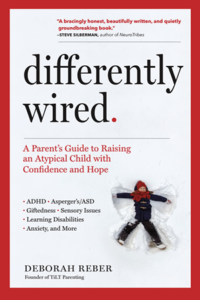
Yeah, yeah, that makes sense. I wrote about this in Differently Wired, but I definitely, when ADHD first came up as a provisional diagnosis for my kiddo at the age of six or something, I was really not into it. I was like, I don’t think so. I definitely had this idea of what ADHD was. I now know my entire family is ADHD. And that’s just been an incredible shift kind of seeing it everywhere, right? Kind of understanding where, how the apple does not fall far from the tree, right? Right. So one of the things that you, that is very central to your work is this idea of parenting the child you have. And I love that. And I would like to just hear in your words what that phrase means to you. And, you know, is that across the board or do think it’s different for parents with neurodivergent kids?
Cindy Goldrich:
I say it’s across the board. I’ll explain it this way. Whenever I introduce that concept, parent the child you have, not the child you thought you’d have, not the child you wish you’d have, not the child you’d have if society got its way or your mother-in-law got her way, but that child you’re blessed with. And anyone who has more than one child, whether they have neurodiversity or not, knows that those two kids are wildly different. I mean, you may have siblings that you’re so different from, right? Having nothing to do with, but of course, accentuated by if one of them has ADHD or any kind of other challenges, Opportunities, however you want to frame it. Right? So parent the child you have really means get to know that kid’s unique interests, their talents, their passions, their challenges, their struggles, their quirks, their temperament. Parent that child that you have. You know, meet them where they are.
I’ll give you a quick little example. I’m now blessed. I’m a grandmother. I have a two year old granddaughter. And yeah, joy of my life. And she for now is very much like my daughter was. Now my daughter who I mentioned, now my daughter as a child was definitely very shy and the norm was, well, help her come out of her shell. you know, tell her speak up and all of these other things. Now I really understand and embrace and see this, you know, with my granddaughter. She’s who she is. She’s gonna be fine. My daughter’s a rock star. She don’t I mean, she will be fine. I don’t need to push her to be somewhere else. I need to help her be who she is. Right? So that’s what I mean when I say parent the child you have.
Debbie:
Yeah. It’s such a simple concept, it kind of goes against the grain for a lot of us, especially when we become parents and we really, many of us go into that role with this idea of what our family is going to look like and who our kid will be and the interest, the sports or the other things that we’ve been involved in. kind of want to see our kids embrace those same things. And especially again, I agree it’s all across the board, but when they’re neurodivergent kids, sometimes their plans are so very different than what we had imagined that it’s important to lean into that you have an updated edition of your book, Eight Keys to Parenting Kids and Teens with ADHD. And I’m really curious, because again, you know, we talked earlier about how much has changed just in terms of understanding and awareness about ADHD among the adults you work with. But also if we think about knowledge of executive function, you know, of just how neuroscience has changed what we know about the nervous system, like there’s been a lot of change in this space. And so I’m wondering, you know, what was really important for you to incorporate in this new and updated edition? Are there kind of new insights or research that shaped anything that you included in the book?
Cindy Goldrich:
That’s a great question. I think a lot of what I wanted to do was really go deeper on things that I knew in the last 10, 15 years since the book came out were really both resonating with parents and were also really important. If it wasn’t resonating, I needed to make sure they got it. So I went deeper on, on, on a whole host of things, but some of some examples, the collaboration, that whole process, I really revamped it. I really went deeper on how to meet your child where they are, but set your appropriate boundaries, but also go deeper in terms of helping them understand your concerns. So that, you know, something as simple as, you know, I wish my kid would keep their room more organized, because I see the future so clearly. I see the impact of they’re not finding things, they’re feeling stressed, they’re feeling rushed, they’re losing confidence in all these other things. I want them to know how to really reach their kid and communicate it. So it’s not this top-down parenting of you’ve got to clean your room. Instead, it’s this co-creation of, hey, what’s working for you? What’s not? How can I support you and let you take the lead on these things? So I really went a lot deeper on how to do that process. It’s very simple to just say, oh, well, you just have these conversations, but you got to know your kids so well first. And that’s why I go back to the parent, the child you have, right?
Because the reason that one child may struggle to clean their room and the reason it may be important for that child is different than for the other child. So I can’t just use my same rationale. I’ve got to meet them where they are. So that’s one thing I really went deeper on. Another thing is girls and women, right? We knew back then that we were calling this more, you know, mostly boys, mostly hyper boys who are outgrowing it. That’s not the case, right? It just shows up so differently for girls and women. And the reason I accentuate women is because so often parents come to me and they’ll take either my common connected workshop series or they’ll, you know, some of my lectures or books, whatever. And they’ll say, Cindy, that was me. That was me as a kid. I didn’t realize that. I’ve even done, I’ve come to lectures for huge rooms of educators. And I would have the educators come up afterwards and say, I’ve been teaching these kids all these years. How did I never realize this was me? So talking a lot more about that. And then another major thing is because I knew that the book was being read by a lot of professionals.
I wanted to include some more perspectives and support for them as well. It’s still not the main focus of the book. It’s still parenting. But so often, and you probably know this as well, parents will come to me and they say, my kid’s been in therapy for years. It’s not doing anything. Like, how much does your therapist know about ADHD? The reality is, unless they have done what I did, which was veer off and become a specialist in ADHD, they may be the best therapists in the world. But that doesn’t mean that they are educated about neurodiversity, right about work. I mean, probably all of these things that we now understand are so important.
Debbie:
Yeah. Yeah, for sure. You know, I’ve done episodes on that, just how therapy really needs to have a neurodiversity affirming lens because we can’t just kind of do an approach, a standard approach for anxiety or for whatever’s going on without doing it through the framework or the lens of understanding the how neurodivergence is impacting them.
Cindy Goldrich:
Add on educators. Because if you’re educating a student and you don’t understand, because the majority of these kids are highly intelligent, sometimes even twice exceptional, right? And they’re being educated in the mainstream classroom. They may get special services, resource room, whatever else. But for those gen ed teachers to not understand this is detrimental. That’s why the teacher training becomes so vital.
Debbie:
Yeah, and if they understand these kids have certain accommodations to support them, but they don’t even understand, or they may not understand the why behind those things. So then it can create this kind of tension almost between a teacher who kind of knows they need to administer these services and supports and accommodations, but may not understand the real reason why. Yeah, super interesting.
Cindy Goldrich:
And then on that explaining to the kid why, because so often, you know, we work so hard to get this kid the right IEP and the 504 and all that. And the kid’s like, I don’t want that. I don’t want to extend the time. I don’t want to be different. So we need to help the kid also understand.
Debbie:
Yeah. So, all right. Well, you mentioned collaboration and I just wanted to point out for listeners that, as the title of the book is eight keys to parenting kids and teens with ADHD. are, there are eight keys that you break out in the book. And one of them is teach collaboration. And I’m wondering if you could talk a little bit more about that. Cause it is a theme in your book of moving from power and control to partnership and collaboration. I’m wondering if you could give us an example of what that looks like. Because I think it’s really hard. I know it’s really hard when we have kids who are struggling in certain areas and we may be over involved in trying to get our kids back on track or kind of support them. And it can come off as controlling. And that’s not what we want. So what might it look like to make that shift?
Cindy Goldrich:
Yeah. At the base, means replacing, because I said so, with let’s figure this out together. Because parents, you know, they need to use curiosity and calm language and reflection to really engage their child in the problem solving. This shift is what reduces the power struggles and helps the kids gain self-awareness, right? And emotional regulation over time. So, you know, I’ve had parents in my practice whose kids are college graduates or not even college graduates, let’s say they’re in college, right? And they’re like, is it too late for me to work with my kid? You know, they’re out of the house or they’re part out of the house and everything else. And my answer is, yeah, it’s not too late because A, they’re not fully launched and B, even when they are fully launched, you’re still their parent.
If you’re blessed and they’re going to have kids or whatever, you’re still going to be in that role. So if you think at that point, you’re going to be able to do it out of power and control, it’s not going to work. Right? So let’s bring that down even to the younger kids. If I’m going to say, Hey, you better not drink at that party. How am going to control that unless I’m at that party? So I need to go deeper and collaborate with them and talk about, you know, what are the issues involved here? And what are you going to do if you get in that sticky situation? How can I support you?
Debbie:
Yeah. I’m wondering, just thinking about the teen years, I just did an episode with Dr. Cara Natterson and Vanessa Kroll Bennett on puberty. And so we’re just thinking about that kind of perfect storm of hormones and puberty and then add in neurodivergence and then specifically ADHD with lack of impulse control and what we know teens brains are wired to do which is like take risks and not think through the consequences. So I’m just wondering, you know, some general thoughts from you on maybe what the biggest challenges that you see when you work with parents of kids that age and how do you kind of help them get things back on track so the family can feel better?
Cindy Goldrich:
Absolutely. Well, the first thing to know is what’s the job of a teenager if I say black? White. Their job is to separate from you. They’re doing what they’re supposed to be doing at that age. know, parents will say, well, I came up with the best idea and my kid said, I don’t want to do it. And I said, why not? They said, because it’s your idea. It’s to be my idea. Which again, goes back to some of that collaboration as we can work together. Let them come up with the solution. That’s the one they want to go for anyway. Right. In those teen years, what does that look like? How do we get to do that? I believe it’s essential to spend one on one time with each of your kids, neurodiversity or not. Right. But one of the challenges when the kids become teenagers is, you know, parents will say, my kid doesn’t want to spend any time with me. And I get that. But don’t forget, you are still their favorite toy. You’re still the one they want to please. You’re still the one whose attention they want. Right? So find ways that are more centered on them that they’ll let you in. Even if it means, hey, do you mind if I sit on the couch with you? I’m reading a book. Because somehow being in that physical space, they will open up a little bit more, know it will gradually happen. Going for a walk, you know, going for that drive in the car, anything you could do to spend time and then I’ll, I’ll add to that. Try to have some kind of interest that you can share. don’t care whether it’s and again, I’m dating myself when my, when my kids were young and American Idol was new. We watched American Idol together. I know really did myself. You know, we watched or you know, the stock market, there was a particular stock, even if we weren’t investing, we were just curious about. So we were kind of, and it didn’t have to be more than five minutes, but it was constant because it happened every week.
Debbie:
One of the quotes I pulled out is, just when children seem the most difficult, aggressive, withdrawn, or defiant, they often need connection the most. And I think that has jumped out at me for a reason. And it can be really hard. It’s that idea of how do you hug a porcupine, right? But just that reminder that our kids really, they do crave and want that connection. just may be harder to realize that and also harder for us to get out of our own way in order to, or our own anxieties or what am I making this mean and all of that stuff.
Cindy Goldrich:
Well, I’ll give you an example from my Calm and Connected Workshop series. was running it last night and a parent said to me, know, my kid is frustrated because he says, stop lecturing me. You’re always lecturing me. And she said, I don’t know how to always stop because there’s so many important things. I said, well, get over yourself because it’s not about you and what you feel you need to get in there. If it’s not getting in there, what’s the point anyway? Back off, enjoy your kid, let him enjoy you, and then you can sneak in a few things here and there.
Debbie:
That’s so funny. Yes. I mean, and I say it’s funny because before dropping my kid off at university this year, I had like two weeks left and there were so many little wisdom, truth bombs I wanted to share and I want to make sure I had this conversation. And I ran out of time because I was trying to just find little moments because I felt it was so important that I communicated this one idea. Yeah, and of course, that’s just really not how it works. that was all about me. It was all about my needs. OK, so just to kind of like move on, but also this is hopefully a good segue to my questions here about enabling versus support. And this is something that comes up all the time in my community and just that fine line. And we talk about scaffolding and we talk about different ways to support our kids, but it’s messy. It’s not always a clear line. so this is something you write about in the book. And I’m wondering if you could talk a little bit about, you know, enabling versus supporting. You actually have a great definition of enabling in the book. Do you mind if I read that? So you say, “here’s my definition of enabling. Enabling is doing something for someone without a plan to teach them to do it for themselves. Supporting, on the other hand, means helping them in a way that aligns with their developmental needs and prioritizes growth.” And that felt very clear to me. And I’d like to hear more from you on this.
Cindy Goldrich:
Sure, sure. I’ll give you the example I always give. When we talk about enabling, when I ask people, you know, what’s enabling? They’ll say things like, doing something for your kid or blaming others, right? If the teacher didn’t give so much homework, you wouldn’t, you know, you wouldn’t be in this situation. It’s the teacher’s fault, right? Or, I’ll just, you know what two plus two is, you know, it’s four, right? Just those subtle ways. Cause why? Cause it’s our own parental anxiety that we’re trying to relieve, right? So I just want to make my world, by definition, extension, my child’s world, okay, right? So the kid forgot their violin. It’s the fourth time this month. And what does the wonderful parent do? I’ll bring in the violin, right? I don’t want my kid getting in trouble and, you know, he loves violin and, know. And of course the teacher may look and say, the parent is just enabling this kid and everything else. But what happened at home? See, Johnny’s a good kid. And Johnny knows I can’t practice the violin until I finish my homework, which of course, you know, with these kids that takes like so much longer, right? So it’s late at night, Johnny goes downstairs. He starts practicing. The parent yells down, Hey, Johnny, time to get ready for bed. You got to go take a shower. You’ll pack up afterwards. Go ahead up. Johnny goes upstairs. Evening ends, morning comes, parent goes downstairs. What do they see? The violin. And they think, if I take it in, I’m enabling, right? But I feel so bad. He’s such a good kid. He made the bus today and his shoes matched and okay. So he’s still, you know, fighting with his sister. I’ve got that on my list of things to work on and his room is a mess. Yep. Got that on the list. I think I better add this to the list.
Debbie:
Helping to remember the violin. So what I say to parents, and I feel like this is a really important message, is sometimes the outside world, it seems like you’re enabling, but give yourself a little grace. Sometimes what you’re doing is supporting. Sometimes you’re prioritizing and saying, yeah, I got a deal with that, but I got bigger fish to fry right now. Yeah, that was one of my things I said a lot when my kiddo was younger, I’ve got bigger fish to fry. Like this is not where I’m putting my energy right now. So I really liked that the way you just explained that and you shared that story in the book and it is really helpful. And I think parents do tend to beat themselves up, especially if there’s a perceived judgment that they are feeling from others and you know, well gosh, aren’t you supposed you know. Why are you stepping in? Your child should know how to do this by now.
So something we talk a lot about here at Tilt is just that really being fluent in our kids and kind of understanding where the capacity is, where are the windows for opportunity for growth, but doing it in a way that kind of meets them where they are. And that might change even from day to day, depending on how their day went, right? So let me ask, we’ll start to wrap up. I wanted to ask how you kind of support parents. So because we know that parenting these kids can be more of a roller coaster, the runway can be long, the path more uncertain, it can be a lot more unpredictable and intense emotionally. And so how do you help parents kind of stay centered and grounded and not get burned out themselves.
Cindy Goldrich:
Yeah, that’s such an important question because you’re right, parents are just overwhelmed. They’re exhausted. They’re just beat up. You know, start by shifting your own energy. Start by saying, you know, to your kid, hey, I’m here to help, not to fix, not to punish. Right. And be curious about your kid. Realize that your assumption about their behavior is really your hypothesis. So be curious. I wonder why when I called him, he didn’t come down, rather than just going into that emotion of, he never listens to me. Right? So pause with that. Choose a moment and figure out, well, what might my kid need help with here rather than, you know, we got to go and everything else. And above all, focus on connection over correction. Just five minutes of that calm presence can really change the whole mood in the room.
Debbie:
Yeah. Yeah. And I love this assumption, shifting that to hypothesis. Like I really like that language. That’s something I can kind of keep in my head. It reminds me of, you know, many, many years ago, I had an ADHD coach on. And one of the things he said that also stayed with me is this question of what were you trying to do? Because I think we kind of see this external behavior that might look like it was a willful choice to be disruptive or to do something that was not okay or appropriate for the situation. And there’s always a reason why. But when we kind of jump to our own assumptions, we’re going to miss that. then obviously, we know that’s why these kids tend to get in trouble a lot more than their neurotypical peers. that, over time, has really devastating consequences.
Cindy Goldrich:
That’s right. Yeah, absolutely.
Debbie:
Yeah. So let me ask one last question. I’m just thinking for parents who are listening to the show, who are raising one or more ADHD kids, they are feeling overwhelmed. because it’s an intensive experience raising these kids, especially during certain stages of life, more intense than others. But if they’re… the vibe in the house is kind of chaotic and rooted in conflict and there’s just a lot going on. What’s one thing they could even try today after listening to this to help them kind of change the tone or the energy in their house?
Cindy Goldrich:
I would say be honest with your kids and name them and say, you know what guys, we are all sort of at a really high level right now. I love you. I don’t want it to be like this. I’m sure you don’t want it to be like this either. Why don’t we just, whether it’s today, a week from now, a few, you know, let’s plan something that is just stress free zone together. You guys can choose it. I’m open, you know, whether it’s
Debbie:
You you know, your kids going for a walk, going to a gate, whatever, right? Let’s just do something so that they know that you feel it. They feel it. We can just sort of let’s relax into this and figure something out.
Cindy Goldrich:
That’s it, I have so much hope for it. You know, I hope it continues to do what the first edition did, which, you I think about all the reviews I got from that, which is I understand my kid differently. I, you know, I always start off by saying like, okay, here are all the stressors about ADHD and everything else, but let’s talk about what’s wonderful. Let’s talk about the potential of that kid. It helps them reconnect with the potential of that kid. So that’s what I want the book to do. Help them get back to who that little kid is that they love, right? And help them gain confidence as a parent.
Debbie:
Yeah, that’s great. I love that. Okay, so let me just name the book again listeners, I will have links in the show notes for this if you want to check it out. It’s eight keys to parenting kids and teens with ADHD. And is there a specific place on social or elsewhere that you’d like listeners to check out your work?
Cindy Goldrich:
Sure. I’ve got a free download for them. So if they go to, can I give the website? So my website is PTS coaching, by the way, that stands for pathways to success. Cause I think these kids have this kind of pathway. So ptscoaching/tilt T I L T if they go there. I have a free download for them. That’s going to have the introduction of the introductory chapter to the book. It also has some nice tools, the parent Wheel of Life and the student Wheel of Life, which really help you kind of look at where you are now and where you’re wanting to make your shifts and changes. So those are some really good
Debbie:
Very cool. I love it when guests make a special webpage just for my listeners. So thank you for that. That’s really cool. And yes, listeners.
Cindy Goldrich:
My pleasure, my pleasure. And find me on Facebook at, PTS coaching and LinkedIn and all those things. My handle’s PTS coaching.
Debbie:
Okay, perfect. Thank you. And listeners, as always, I will have links in the show notes page to everything that we talked about today and all those places where you can connect with Cindy. And yeah, I just want to say thank you for joining me. Congratulations on the book. And yeah, I really appreciated this conversation.
Cindy Goldrich:
Absolutely, thank you.
Do you have an idea for an upcoming episode? Please share your idea in my Suggestion Box.