Dr. Scott Barry Kaufman on Moving Beyond a Victim Mindset
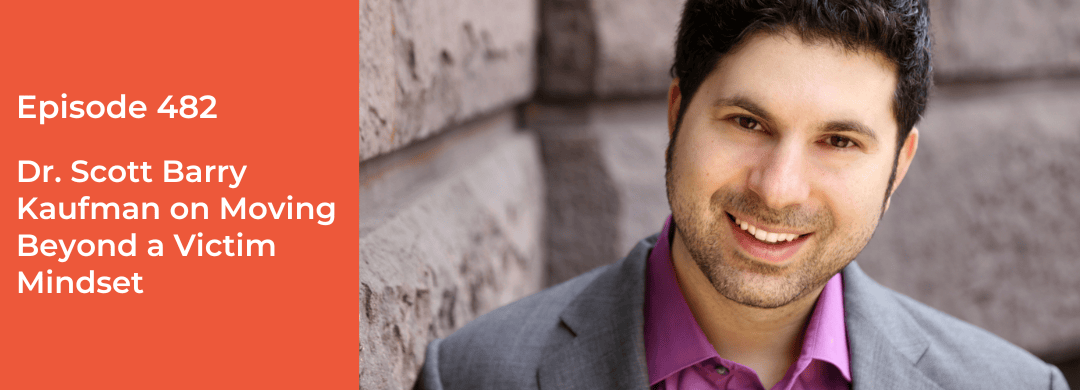
Today’s conversation is all about shifting from a mindset of limitation to one of empowerment and possibility. My guest is Dr. Scott Barry Kaufman, a psychologist, professor, and bestselling author whose work focuses on helping all kinds of minds live creative, fulfilling, and self-actualized lives. In our conversation, Scott shares insights from his latest book, Rise Above, which explores the concept of the victim mindset and how we can move beyond it. We talk about the role of neurodivergence in shaping perspective, the traps of learned helplessness and rejection sensitivity, and the character strengths that help us cultivate resilience and personal growth. Scott also reflects on his own journey toward empowerment and what it means to truly rise above our limitations—both real and perceived.
About Dr. Scott Barry Kaufman
 Dr. Scott Barry Kaufman is a psychologist, coach, professor, keynote speaker, and best-selling author who is passionate about helping all kinds of minds live a creative, fulfilling, and self-actualized life. He is a professor of psychology at Columbia University and director of the Center for Human Potential. He hosts The Psychology Podcast which has received over 30 million downloads and is widely considered among the top psychology podcasts in the world.
Things you’ll learn from this episode
- How Scott Barry Kaufman’s personal experiences shaped Rise Above and his exploration of the victim mindset
- Why a victim mindset is not fixed—and how self-empowerment and learned hopefulness can transform it
- How rejection sensitivity and cognitive distortions can reinforce feelings of victimhood, especially in children
- Why leveraging character strengths and modeling emotional flexibility builds resilience and growth
- How an empowerment mindset helps individuals take ownership of their challenges and personal development
- Why self-compassion and realistic expectations are essential parts of the ongoing journey toward self-actualization
Resources mentioned
- Rise Above: Overcome a Victim Mindset, Empower Yourself, and Realize Your Full Potential by Scott Barry Kaufman, PhD
- VIA Youth-103 (Age 13-17) (Currently being tested)
- Dr. David Yeager on the Science of Motivating Young People (Full-Tilt Parenting)
- 10 to 25: The Science of Motivating Young People: A Groundbreaking Approach to Leading the Next Generation―And Making Your Own Life Easier by David Yeager, PhD
- Mindset: How We Can Learn to Fulfill Our Potential by Carol Dweck
- Dr. Tamar Chansky on Children & Negative Thinking (Tilt Parenting episode)
- Freeing Your Child from Negative Thinking: Powerful, Practical Strategies to Build a Lifetime of Resilience, Flexibility, and Happiness by Dr. Tamar Chansky
- Dr. Sharon Saline on Understanding Rejection Sensitive Dysphoria (RSD) in Tweens and Teens (Tilt Parenting episode)
- Dr. David Yeager on the Science of Motivating Young People (Tilt Parenting episode)
- 10 to 25: The Science of Motivating Young People: A Groundbreaking Approach to Leading the Next Generation―And Making Your Own Life Easier by David Yeager, PhD
- Victim Culture & Self-Actualization (Scott on the Last Meal with Tom Nash podcast)
Want to go deeper?

The Differently Wired Club is not your typical membership community.
There’s something here for everyone, whether you’re a sit back and absorb learner, a hands-on, connect and engage learner, and everything in between. Join the Differently Wired Club and get unstuck, ditch the overwhelm, and find confidence, connection, and JOY in parenting your differently wired child.
Learn more about the Differently Wired Club
Episode Transcript
Debbie:
Hey Scott, welcome back to the podcast.
Scott Barry Kaufman:
I’m so honored to be back.
Debbie:
I’m honored that you’re joining me again. I remember the first time we talked. I was in the middle of a move back to New York. I was in a temporary apartment. And it was seven years ago. It really was. It’s kind of mind blowing. And life has continued. And you’ve gone down so many fascinating roads through your work. So I’m very excited to explore your new work today.
Scott Barry Kaufman:
No, stop it.
Scott Barry Kaufman:
Hmm.
Debbie:
I kind of just say this for listeners. When Scott was on the show before we talked about his book, Ungifted, and it was just a great conversation. I’ll have a link in the show notes. Definitely go check that out. You’ve also written a book between now and then called Transcend, which was about the new science of self-actualization. And now your new book, I just finished, I listened to it. So it was really fun to hear you read the book. It’s called Rise Above, Overcome a Victim Mindset, Empower Yourself, and Realize Your Full Potential.
Scott Barry Kaufman:
That’s right, there’s no lies detected there.
Debbie:
Well, what I’d really love to know is kind of what led you in this direction. You know, I know you’re like an endlessly curious person, but I really would love to know kind of the journey that brought you to writing this book.
Scott Barry Kaufman:
I think over the years, I’ve reinterpreted my own personal story in many different ways, trying to understand what is it a really a story of? it a story of intelligence being misdiagnosed? Is it a story of what is it creativity, imagination and that was underappreciated? So the answer to like most things in life is going to be yes. And, you know, it’s a story of all that. But it’s also it dawned on me, it’s also really much a story of me refusing to have a victim mindset when I was in ninth grade. I was fed up with the special education room and all the accommodation, the constant accommodations when I didn’t even want it or need it. It just really fueled me to want to see what I was capable of and enough research had amassed that I had conducted on a topic called vulnerable narcissism, which is strongly, strongly linked with a victim mindset. then I was like, there’s a book here.
Debbie:
And then it just wrote itself and the rest is history and yeah. Well, you are, I will say too, you are someone who writes deeply researched work very quickly. It’s really impressive to watch from afar. So pretty cool.
Scott Barry Kaufman:
Thanks, Debbie. That means a lot. No book writes itself, of course. Anyone, any author who says that is lying or has a ghostwriter they don’t tell you about. But I personally, I hired an editor for this one. I really wanted to make this as accessible as possible. I feel like all my books keep getting more accessible over the years. Ungifted was my least accessible one. No one’s reading that unless you’re a super nerd and a parent that’s, yeah, once, once that’s really a nerdy parent. Yeah, there you go. But yeah, this one, I really wanted to make it snap and and be entertaining and easily digestible.
Debbie:
There you go. Yeah, well, you did that. You did that. I really, you know, you and I know each other socially as well, and have spent time together. And I really, like, I just appreciated your, just you. You brought a lot of you to the audio read as well. So it was really, it was great. But I always like to kind of make sure we’re all talking about and thinking about the same things.
Scott Barry Kaufman:
I did. Thanks, Debbie.
Debbie:
We’re going to be exploring the main theme of your book is this victim mindset. So what is a victim mindset?
Scott Barry Kaufman:
Well, a victim mindset is a dynamic mindset. First of all, it’s not who you are. It’s not your enduring trait. It’s something we can all kind of go in and out of. And some of us stay there longer than others. It’s a dynamic mindset where we blame all of our problems on others, external circumstances. We ruminate about something that may have happened to us that is certainly could have been challenging, but we roommate in a very not productive way. We have a lot of hostility, a lot of resentment, and we don’t really move forward with our lives with hope and purpose and agency. And so I wanted to move people to the more empowerment mindset because I think it’s a lot more productive, regardless of what we’ve experienced in our lives.
Debbie:
Yeah. And I think the topic of victimhood or having a victim mindset is super relevant right now, just kind of in the world. But I think I was so interested in this because I was thinking of an episode I did years ago with Dr. Tamar Chansky on freeing your child from negative thinking, which was a lot about cognitive distortions. And you write a lot about that in the book. I recognize that a lot of our neurodivergent kids can get really stuck in kind of this negative view and having that victim mentality or that victim mindset. so I’d love to know, what is it? Is neurodivergence a common thread with someone who has a victim mindset? Or what are some of the commonalities?
Scott Barry Kaufman:
No, I mean, I don’t think that people who are neurodivergent are more likely to have a victim mindset. I’ve never seen any data showing that connection. But I think any of us, when we have a challenge in this world, and a lot of neurodivergent individuals obviously view it as not just a gift, but also there’s real struggles associated with being so different from others. I think that there’s something so natural and human about wanting to sort of blame the world for your issues and to say, you know, well, no one gets me or the world is against me. I can’t belong anywhere. I don’t fit anywhere.
And as though the world’s purpose is to accommodate you everywhere you go, you know, and I don’t think people realize the extent and I think a lot of kids, you’re very well-meaning parents who are coddling the hell out of these kids. And then when they enter the real world, they expect everyone to be their mother. Now I wish everyone was my mother. My mother, she makes me the best meals when I go home. If she knows I’m angry about something, she’ll behind my back call the person and be like, leave my Scotty alone. Talk about the best advocate in the world is usually the mother or a good father. Let’s not forget good fathers, of course. But not everyone in the world is your mother. I think we don’t do these kids with neurodivergent issues a great service by setting them up so that they expect everyone to open doors for them and to, you know, have an IEP when you’re 50 years old. You know, there’s no IEP when you’re 50 years old and there’s no IEP of life. And I’m not quite put it that way, but it’s true. And this is not tough love. I talk very much in the book about how my approach is unique. I think I have a unique voice in this space. I’m not either extreme. I’m not the extreme coddling side, which I just mentioned, but I’m also not the pull yourself up by your bootstrap side either. I’d like to think there’s a third way I call real. What do I call it? Honest love. Yeah, that’s what I call it. I call it honest love where we really teach these kids to be realistic about what they can expect and what they, and be realistic as well about what they can expect from themselves. I think a lot of, we’re underestimating a lot of potential in these kids. And for me, just being realistic is them knowing they’re capable of so much more.
Debbie:
Yeah. And you mentioned earlier, and we talked about this on your last visit to the show too, your personal story and how you really pushed back against an educational system that was holding you back and you knew you were capable of so much more. And so I guess I’m wondering, that was your experience and that’s who you are, right? And I’m wondering, Why? What else do we know about nature, nurture? And you have some interesting information in there about attachment. So what is it about who our children are and the way they come into the world that might make them more prone to this? Is part of it just how they are inherently wired, their temperament?
Scott Barry Kaufman:
Well, I think everything’s an interaction for sure. I think there’s certainly biological temperaments that predispose us to certain things. Neuroticism is a big personality trait predictor of vulnerable narcissism and of interpreting all of your life experiences through the lens of this cloud of negativity and I teach a personality psychology class. teach about the emerging field of personality, neuroscience, or some really interesting things. mean, a lot of people have brains that are wired in certain ways to constantly feed them ruminative thoughts. And I’m a very big fan of yes and not but and we really can show dramatic personality changes over time. In my class at Columbia and personality, I have students spend half the semester picking one trait they wanna change and using scientifically backed personality change interventions. And you see extraordinarily changes in just the span of six weeks where someone every single day tries moving in a particular direction that they wanna move in and kind of try to change something. So I think that we shouldn’t view these personality dispositions as prisons, but I think we also need to be aware they exist. And some… you know, a lot of highly sensitive kids, I was one of them, for sure. A lot of highly sensitive kids, we don’t do them a service in, in again, just coddling them all the time and being like, you’re a highly sensitive person. Let’s treat you as though you’re a special angel, you know, and the world will never understand you. And then that child grows up and they view every they’re like, this is the mentality in life is like, no one understands me. You know, it’s like
Well, it’s not everyone’s responsibility to appreciate you and understand you. Do you appreciate everyone you meet? It’s a two-way street too. Do you care about everyone you meet? Are you a kind human? There are a lot of highly sensitive a-holes in the world that we’ve raised to be a-holes because we’ve taught them they can’t do anything wrong. It’s okay, you’re a highly sensitive person. You can do whatever you want. And so I think kind of putting something, teaching important boundaries and teaching and saying you can do this, you know, as much as we can as parents as opposed to I know you can’t do this, which is what I see rampant in special ed programs, resource room programs. And it’s a constant stream of telling the student, I understand you can’t do this. So get to X time on the test. So, you know, this and this and this and this as opposed to wait, I think you can do this. I would love to see a little bit more of that infused into our school system in special ed programs.
Debbie:
So in the book, you referred to learned hopefulness versus learned helplessness, right? And so is that what you’re talking about here that we can often over accommodate or give our kids the idea, whether intentional or not, that they aren’t as capable as they are?
Scott Barry Kaufman:
Well, hope, weren’t hopefulness is, well, first of all, I should say hope is something that you do have to learn in a lot of ways. It’s not something that’s coming inborn in us where we just were born with hope for everything. Although some people do have a hopeful temperament. It’s true. It’s true. But all of us, there’s a very human primal instinct when there’s a challenge to fall into a state of helplessness. Martin Seligman and colleagues who came up with this theory of helplessness found out when they studied humans, not when they were studying rats or shocking rats and dogs, but when they started shocking humans, messed up, messed up research paradigm they did there. But anyway, it’s true. When they’re talking to humans, they discovered that humans actually, their default state was helplessness. That’s not what was learned. Hope is what had to be learned. In order for the humans to realize that they were in this open prison, that they were in this mental prison, but they actually could leave whenever they wanted, in order to discover that required more higher order cognitive processes to come online that were intentional and conscious. But left to its own devices, the brain and the subcortical structures and the way we evolved, it’s constantly pulling us into this helplessness mentality. That’s why we’ll be very clear it’s a dynamic mindset. You know how I said that in the beginning?
I say it because it’s not a book about just your ex-husband, you know, who’s a narcissist, right? This is about, you know, all of us. This is about how all of us can fall prey to this mindset. Now, my publishers were very concerned that the book wouldn’t sell well because it’s saying that maybe the problem is you a little bit, and no one wants to hear that. No one wants to hear that. No one wants to… They love the books that say, you’re badass, you know, you’re…The books are the best sellers, you are badass or your ex-husband’s and nothing’s wrong with you, it’s all your ex-husband’s fault. People love those books. And if you really want to change, if you personally are fed up with these patterns of behavior that you keep getting to over and over and over again, you have to realize at a certain point, the common denominator among all those situations is you. It’s so much more empowering, I think, to take ownership over that and change. If I have a book that didn’t sell well, I don’t blame the world. I don’t blame my readers and say, they don’t appreciate my greatness. No, I sit down. I say, what can I do better next time? You know what? What in my next book? You know, how can I hire an editor next time? How can I be more accessible? Right. That’s the only way you’re going to progress and learn and grow. It’s going to feel good. It’s going to feel better to blame the world and to be like, hey, that’s going to hate. You know, that attitude feels good. I know.
Scott Barry Kaufman:
I know I like that attitude too sometimes it feels good. Haters gonna hate. However, does that help you grow? that attitude help you grow? The haters gonna hate attitude. Does that help you grow?
Debbie:
No, no, just to speak to what you were just saying, of course, I read this when I started reading the book, I’m like, this is such an important book in the world right now, which it is. And I was like, about those people, right? And you go through, you say, just listen to what I’m going to say and see what you’re going to identify with some of these characteristics of a victim mindset. Of course I did. That was right there. was like, yeah, not that I’m being called out, but it was, and it didn’t put me on the defense. It made me feel like, yeah, there’s a lot of room here for all of us to evolve.
Scott Barry Kaufman:
There’s so much room for people to evolve. I really believe so much more in people’s potential than I think they believe in themselves. Often. I’m a self actualization coach. and I built up a program and we do a six months training program for coaches and how to be a self actualization coach. And I want to start training teachers on how to be self, how, know, they view themselves as not just teachers, but self actualization coaches. And what you see just over and over again, and call our clients are stuck in this mentality. And when you’re stuck in this mentality, you’re not focusing on the ways you can improve. You’re so stuck on this notion that you’re the you’re you’re at the final stage and people don’t just recognize your greatness. There’s this implicit assumption, you know, like it’s the world’s fault. You know, I don’t need to change. But I think all of us can constantly be changing and growing and being better on a day to day basis. You know, I choose to. If I choose to go to the gym this week, you know, just in that one moment, I’ve made a choice that I’m not going to, you know, blame the world for why I’m overweight. I’m going to do something about it.
Debbie:
Yeah. And as you said, it can feel better. It can feel more uncomfortable to go outside of that. can feel safer to kind of stay hooked on. You talk about cognitive fusion, staying hooked on our negative emotions. And I also recognize that in a lot of our kids too, right? Because it can be really, it’s strong, right? And it can feel safe. It can keep our world small, which for some of our kids might feel a lot safer.
Scott Barry Kaufman:
Look, parents are so compassionate. A lot of them and they that’s their goal is to, is to keep their child safe. That’s their primary objective. I get it, you know, and there’s nothing that’s beautiful. It’s a beautiful thing. You want to keep your child safe. Um, and you also want to teach them the skills of getting outside of the comfort zone and, um, discovering who they are because safety is not the zone where you discover who you really are. You only discover it when you’re challenged or you’re in an environment where you have to stand up for yourself or you’re in an environment where you are with people who are better than you in something and you discover where you are relative to them. I mean, there’s a million ways in which only by challenging and getting out of the safety zone do you figure out what you’re capable of.
Debbie:
So I guess what I wanted to ask is, I just interviewed Dr. Sharon Saleen about reduction sensitive dysphoria, which we know a lot of ADHD kids struggle with. It’s something I’m familiar with in my family unit, and I really see the impact of it. And so these are kids, people who really can have this heightened sensitivity to criticism, perceived criticism. And so when I was listening to your book, I was thinking about this idea of really feeling like the world is conspiring against you. So I’d love to know your thoughts on the relationship between RSD and a victim mindset.
Scott Barry Kaufman:
That’s right. That’s exactly right. I think there’s a really strong link there. There’s also a strong link between vulnerable narcissism, which I never properly defined for your audience. But vulnerable narcissism is a form of entitlement to special privileges because you see yourself as more fragile than everyone else. And so you think because of that, you deserve special privileges. They go way beyond just accommodations for like, I’m not just talking about someone who’s disabled and they need a ramp. I don’t say they’re a vulnerable narcissist, but I’m saying it’s a mentality you get in where everywhere you go, you know, you it’s for instance, like because I have dyslexia, I shouldn’t have to wait in line at Starbucks. Like, what? No, everyone in this line has their own, should gonna trust me.
You’re not, you’re not, it’s not like you’re, you know, like it is a form of narcissism. And, and, and, and that is actually correlated with borderline personality disorder, interestingly enough. And there’s actually a strong correlation there with rejection sensitivity is one of the main characteristics of borderline personality disorder. And so there is this idea that I have to be protected because I can’t emotionally deal with the feeling of rejection. These are my defense mechanisms. And I deserve special resources because people aren’t aware of how crazy I’ll get. If I, you know, get rejected or if, yeah, you know, there’s so many different ways of being rejected. So that’s a broad label, but where people aren’t treating me as special in a way, you know, there’s a big a big difference between being rejected and being treated as special. It’s a wide gulf, but for people with rejection sensitivity, it’s very black and white to them. So they’re either getting the attention they want or they’re being rejected. Yet that’s not actually how the world works. I talk in the book about how there’s a strong correlation between having a victim mindset and having a hostile attribution bias and in psycho I’ll explain I’ll explain what that means. So what that means is that you tend you’ll tend to see hostile intent in an ambiguous stimuli. So let’s say someone’s just not smiling like you do talk to them they have a neutral neutral facial expression. People with this intense rejection sensitivity or vulnerable narcissism will view that as an act of aggression on the other person’s part. Because they kind of just expect, you know, you got you got to treat me with respect. You got to you got it. It’s like, no, they don’t know people don’t have to treat you anyway. You know, like, no, they don’t. And I mean, of course, they don’t. I don’t I don’t agree with aggression, but not everyone has to like you, by the way. You know, like I have this there’s a quote that came out the other day with this Instagram thing saying where I said something like people don’t realize how wonderful rejection can be. And I was on this show called Last Meal with Tom Nash and I said that and they put that infographic up. And I don’t think people really get that rejection is such a wonderful thing. It can be because it’s all rejection is a redirection of your energies, of your potential, your growth. And if something doesn’t resonate with your vibe. Often you’re probably not resonating with that vibe. Yet with people with rejection sensitivity, rarely ask themselves the question, do I even want to be friends with this person? You know, they get so hung up on why is this person ignoring me? They don’t even ask the question. Well, okay, let’s say you this person wanted to be your best friend. Would you really love that situation? I just taught a whole lecture on this in my science of living well class yesterday on how to have no beep to give. Yeah, that overcome your excessive people pleasing tendencies. I gave him an eight step plan and that was one of the things.
Debbie:
Excellent. Yeah, I mean, it’s so true. And I’ve had this conversation with my kiddo too. It’s like, if you flip it around, there are plenty of people that I would rather not spend time with. And that’s fair. I’m not for everybody. that’s just, nobody is for everybody. That would be exhausting.
Scott Barry Kaufman:
I’m definitely not for everybody. I told my class I said, you know, I feel like 75 % of this class We’re all having fun and you get it and then 25 % of you’re like what the fuck is going on right now… who is this guy and I’m like and I said I’m okay with that I’m okay with sorry. I don’t know. I’m out of course on the full tilt Parents, you know, can’t possibly hear curse words
Debbie:
That’s right. I’ll beep it out. No worries. It’s all good. It’s all good. Yes, I just started a substack that’s more about, it’s not for tilt, it’s more about me as a human, as a mom, as a writer, as just the whole person that I am and I swore in my first post and it was very freeing. I appreciate that. Yes, thank you.
Scott Barry Kaufman:
Yay! I love that for you, Debbie.
Debbie:
Yeah, it was a real moment. okay, you write about an empowerment mindset. because I want to shift before we wrap up because, you know, we’ve spent a lot of time talking about the victim mindset and it is fascinating. And the whole second half of the book is how do we shift this? So it’s very practical. what, how would you describe an empowerment mindset?
Scott Barry Kaufman:
Yeah, it’s really embracing that yes and mindset where we recognize something difficult has happened to us. Excuse me, I have hiccups. We recognize something difficult has happened to us and we also believe in our higher potential for change. So we don’t just stop there with the woes me, you know, we also empower ourselves. We don’t wait for someone to empower us. We often wait too long for someone else to believe in us or for someone else to tell us it’s okay. we’re allowed to have some self talk and self kindness and self empowerment for ourselves. And that’s another part of this equation that often gets ignored.
Debbie:
Yeah, and I was wondering, you know, we had Dr. David Yeager on the show a while ago to talk about his new work with growth mindset. And so when I was reading about the empowerment mindset, I was wondering, how would you say it’s different and or similar to a growth mindset?
Scott Barry Kaufman:
I’d say they’re similar, but they’re different also in some important ways. David Yeager, obviously a great psychologist, has done a lot of work with kids and changing their lives by changing their thoughts about their potential to change their intelligence and their abilities. Empowerment mindset is broader. Growth mindset, at least the way that Carol Dweck has studied it traditionally. It’s really an academic setting. And it’s in my view, I’ve had my own criticisms of growth mindset work. It’s a little too focused on performance. Have a growth mindset about your abilities, about your achievement, about your, you know, test scores. That’s not my focus. My focus is about growth as a whole person. So when I talk about an empowerment mindset, I’m talking about the ways of thinking that help you overcome life’s challenges in ways that recognizes the suffering and has a lot of love for yourself and compassion for yourself and what you’ve been through like a friend and also is constantly trying to get you to believe in your potential for change. that change doesn’t always lead to the higher achievement, you know, like that change can lead to greater connections, that change can lead to greater creativity. There’s so, know, a greater sense of purpose, you know, so many things in your life.
Debbie:
Yeah, and I just want to say for listeners too, that there’s so much hope here. So if you have, if you’re raising a kid and you’re listening, maybe you’re also recognizing yourself in this conversation. But if you, you know, are parenting a kid who, who is kind of stuck, you know, in a victim mindset, or, you know, has negative feelings and getting stuck there. That’s not the end of the story. Like there are a lot of ways that our kids can shift. And I’m wondering if you have thoughts for parents on how they could support this healthy development of an empowerment mindset in their kids.
Scott Barry Kaufman:
I think play Yes And a lot more with your kids. When they come home and they’re crying about failing a test, know, really embrace the Yes End of that. the, yeah, that you didn’t do your best this time. And, you know, we’re immediately going to go into mode where we’re going to be constructive and figure out, you know, I know you can do better than this, you know, or, you know, coming home. I mean, I think there’s this instinct from parents to just be so nurturing… that they just want to take all the, I know pain and suffering away from their child. I think my mom was like that. She was very overprotective. She wanted to make sure that I never suffer, never had any pain. I think that that’s unrealistic to expect that out of life, but we can really do a lot. I think parents can really do a lot to show them other ways of coping and dealing with situations that involve healthier, emotion regulation and better cognitive, like overcoming cognitive distortions, which I think kids have a lot of when they come home. They have overgeneralizing. I think parents would really do well to read my book and read the different kinds of cognitive distortions that people can have. And I think kids have them up the kazoo. Overgeneralizing, black and white thinking.
Debbie:
Totally. Catastrophizing. Yeah. I agree. And I also think that that can be reinforced with the way a lot of our kids are spending time in online communities and discord groups. they’re spending a lot of time online. And they might find groups that are reinforcing those mindsets or those distortions because they’re finding each other, right? And it’s validating and feels good in that moment. And I just want to say too, you talk about emotional flexibility is what we’re looking for here. Because you talk about the perils of avoiding negative feelings. so we want our kids to learn not to suppress their negative feelings or to avoid them, but to learn how to move through them. as I’m reading that, I’m thinking also like, I really had to learn how to be okay with my negative feelings. And I try to model that now. And I would think that’s also an area that parents could be modeling their own emotional flexibility so their kids can start to realize it’s okay to feel these things.
Scott Barry Kaufman:
Yeah, well, you’re you’re you’re spot on. We also don’t realize they tend to watch a lot of these things are genetically passed down to your children, you know, so parents who maybe score very high in neuroticism. their child shows a lot of traits of neuroticism, the parent might be like, what have I done wrong in my parenting? It’s like the only thing you’ve done wrong is you’ve given them your genes. Let’s be honest, you know, like sometimes, you know, the field of behavioral genetics shows that parenting matters a lot less than we think it does. And within the normal range, of course, when it comes to trauma and abuse, that’s a whole different story. But yeah, within a normal range of parenting. recognize, as a parent, recognizing these traits in yourself and thinking about and working to change your own traits and then teaching your children how to change their traits. That’s the way. That’s the way. That’s the way.
Debbie:
That is the way. This is the way. Let me ask you one more question, and then we’ll wrap up. I thought this section on character strengths was really interesting. So can you talk about the relationship of character strengths and helping our kids kind of consider those, or maybe the way that we acknowledge those in our kids in terms of helping them develop more of an empowerment mindset?
Scott Barry Kaufman:
Heck yes. There’s a website, the Via Institute, where you can find out your top character strengths and being able to lead and with your character strengths, be mindful of what your top character strengths are allows you greater freedom to bring those character strengths to bear on any tricky, challenging situation. Maybe your character strengths are creativity, humor and bravery. Well, teach the children that instead of having to fall apart every time something makes them uncomfortable, remind them you have humor, bravery and creativity to handle the situation. That’s pretty bad ass, you know? Keep the top three character strengths up on a wall, you know, in your house. Just you know, every time the child comes home and they’re like crying, they’re like, Sarah rejected me for the middle school dance. Point to the point to the wall, you know, or got to be on the exam. Point to the wall. Don’t even answer. Just point to the wall. Just keep reminding them. Keep reminding them that, you know, like there there’s a there or still higher parts themselves that they can bring to bear in any situation they may have forgotten.
Debbie:
And listeners, I’ll put a link in the show notes because I believe there is a character strengths test or assessment specifically for kids, at least teens that might be a little different than the one that adults take. But it is fascinating. And the thing is, they’re all strengths and we all have them. So I think it can be really powerful. So I’ll include that in the show notes. Scott, is there anything before we say goodbye that for you know, know, this show, I know it’s been so fun. I’m sorry. But you but knowing the audience who’s listening to this show and your, you know, relationship with twice exceptionality and you know, in in this community, is there any kind of last thoughts that you would want to leave listeners with?
Scott Barry Kaufman:
Cool. The way you said that. I have rejection sensitivity. No, I’m joking.Well, as you know, I’ve been a big advocate of 2e minds for a very long time. And I see this research extremely pertinent to people who are feeling this dual identity. We’re on the one hand, they’re like, well, have lot of limitations, but then on the other hand, I know I can do this, this and this. And a lot of this just goes down to the same sort of thread of breaking down those false dichotomies or viewing yourself as only the worst thing that’s happened to you, which I see is happening a lot in our society right now. People are reducing their identity to the worst part of themselves. And so a big part of this is, is encompassing the whole of who you are, not leaving any of it behind and, and, you know, still acknowledging the limitations and constantly pointing to the higher potential and it’s really bringing it all together in a lot of ways.
Debbie:
So good. Thank you. I’m going to name your book again because I do encourage listeners to check it out. It’s called Rise Above, Overcome a Victim Mindset, Empower Yourself, and Realize Your Full Potential. And I have to ask you, what are you working on next?
Scott Barry Kaufman:
Well, I’m really, well, I’m focusing a lot on teaching now to greater, greater, greater degree I ever had before. I have a full course load and that keeps me quite busy. And I also have a professional mentalist magician. So I’m putting together a big show, you know, one that combines human, the science of human potential with magic and mentalism and music and all sorts of stuff. So I’m working on a show. Yeah.
Debbie:
That’s exciting. Awesome. Okay, well, Scott, thank you. It’s been such a pleasure to chat with you today. And yeah, I just appreciate your time.
Scott Barry Kaufman:
Thank you, Debbie. Thank you.
Do you have an idea for an upcoming episode? Please share your idea in my Suggestion Box.