
A Conversation with Naomi Fisher About EMDR
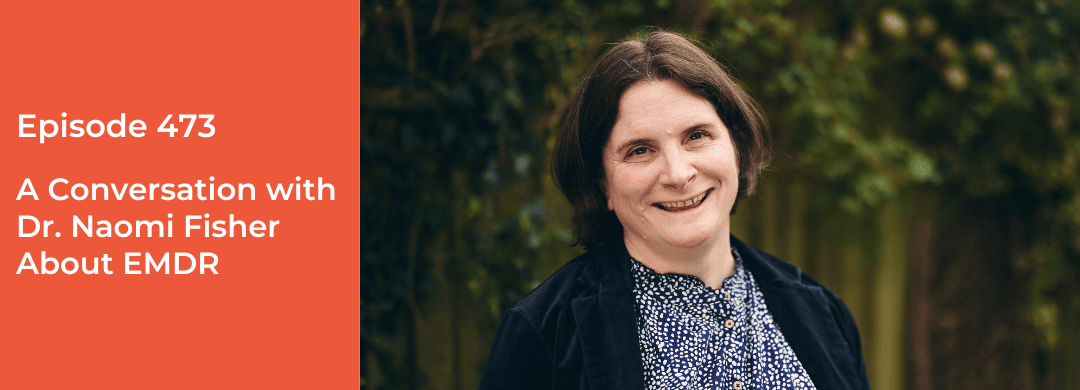
Today we’re exploring EMDR—Eye Movement Desensitization and Reprocessing—a therapeutic approach that’s been shown to be highly effective in treating trauma, including for neurodivergent individuals. My guest is Dr. Naomi Fisher, a clinical psychologist who specializes in trauma, autism, and alternative education, and an expert in EMDR. Naomi will share her journey into EMDR and explains not just the mechanics of how it works, but also what actually happens in a session. We talk about the importance of understanding trauma in children, particularly those who are neurodivergent, and why flexibility and attunement are so essential for therapists in creating a truly supportive environment.
About Dr. Naomi Fisher
 Dr. Naomi Fisher is a clinical psychologist who specialises in trauma, autism and alternative education. She is the author of several books including When the Naughty Step Makes Things Worse and the Teenager’s Guide to Burnout. She runs webinars for parents and more of her work can be found at www.naomifisher.co.uk
Things you’ll learn from this episode
- How EMDR combines emotionally activated memories with bilateral stimulation to help process trauma
- Why trauma can get “stuck” and how EMDR supports the brain’s natural healing process
- How EMDR can be effective for both adults and children when delivered in a safe, supportive environment
- Why neurodivergent individuals may have unique trauma responses that require flexibility in therapy
- How parents can play an important role in helping children make sense of traumatic experiences
- Why choosing accredited, well-trained therapists is critical for safe and effective EMDR treatment
Resources mentioned
- A Different Way to Learn by Naomi Fisher
- Dr. Robyn Koslowitz on Post-Traumatic Parenting (Full-Tilt Parenting podcast)
Want to go deeper?

The Differently Wired Club is not your typical membership community.
There’s something here for everyone, whether you’re a sit back and absorb learner, a hands-on, connect and engage learner, and everything in between. Join the Differently Wired Club and get unstuck, ditch the overwhelm, and find confidence, connection, and JOY in parenting your differently wired child.
Learn more about the Differently Wired Club
Episode Transcript
Debbie:
Hey Naomi, welcome back to the podcast.
Naomi Fisher:
Thank you so much for inviting me back. It’s great to be here.
Debbie:
Yeah, it wasn’t that long ago that you were on the show, you were on the show, and listeners, I’ll have a link in the show notes. It was a great conversation about self-directed learning. We talked about PDA. And I also had, was like, let’s just touch upon EMDR, and then I realized that’s not fair to do in this conversation. It deserves its own conversation. So yeah, so that’s what we’ll get into today, and I guess as a way to start, I would love to know kind of what drew you into using EMDR as a therapeutic approach and kind of tie that in with the work that you do in the world.
Naomi Fisher:
So when I was a clinical psychology trainee, I was really interested in working with trauma, and I still am actually. So really working with people to whom terrible things have happened, maybe things that most of us just don’t ever encounter in our lives, and who then are living with the psychological consequences of that. And it was a particularly exciting area for me as a clinical psychologist because it’s one of those areas where there isn’t really medication that works if you’ve got post-traumatic stress disorder. mean, there’s antidepressants and anti-anxiety drugs, but there isn’t really a drug that’s really helped with that. But there are psychological interventions like EMDR and also Trauma-Focused CBT which the evidence shows can really make a huge difference. And so I was really excited by that. So I, and I actually, I was lucky when I was a trainee as a clinical psychologist 20 years ago.
I was given the opportunity to go and train in EMDR. I was working in a specialist trauma team as a trainee. And one of the ⁓ other consultants, clinical psychologist there was an EMDR trainer. And I was given the opportunity to go and I just, from then on really, I was like, okay, this is really great. I really like it and it really fits with my way of working. And I’m now a trainer myself. So I’ve come the kind of full circle since then. And I think what I like so much about it is that I feel like it’s structured and directive therapy, which is also client centered. So it very much starts with the person who, where they are, it creates a space for them. It holds that space for them, but the person’s process is absolutely their own. And you don’t, as the therapist, you don’t impose any ideas about what that process is going to be on the person.
Debbie:
Which makes sense why it can be such a powerful modality for neurodivergent folks, right? Because that’s not always the case. So, okay, let’s just so we’re all on the same page here. Would you define EMDR for us and explain what it is?
Naomi Fisher:
Absolutely, yes, exactly. Okay. So it’s an evidence-based psychotherapy, is basically has the main, the main kind of mechanism of change is that we combine emotionally activated memories with some kind of bilateral stimulation. And that can be eye movements. So people might move their eyes from one side to the other, but it can also be tapping or clicks or moving your legs. It doesn’t really matter, but there’s combination of those two things together is what really makes it EMDR. And it was discovered by Francine Shapiro, who’s an American psychologist, at the end of the 1980s, I think. And she famously was walking through a park, thinking about some terrible things that have been happening to her. And she got through the walk in the park, and she realized that she felt better. And she wasn’t sure why. I mean, you could think there are many reasons why walking the park might help you feel better. But she thought, I’ve been moving my eyes following birds up in the sky and noticing them. And maybe there’s something about moving my eyes and thinking about these things that have happened to me that’s helped me feel better about the things that have happened to me. So she went away and tested it out. And she actually started off with working with, I think it was veterans, military veterans. And it was thinking about, obviously, terrible things that happened to them. And she would ask them to follow her fingers and try moving their eyes. And she discovered that the memories became less distressing. And from that, the whole kind of therapy has grown really and there’s now a lot of evidence that it’s really effective for adults and children and it’s recommended in trauma guidelines across the world. It’s recommended by the World Health Organization in the UK, it’s recommended by the NICE guidelines. It’s got a good evidence base behind it now to show that it’s really effective. Lots of people think about what the moment why that would be there. We don’t necessarily know exactly what it is. There are lots of different theories as to why it is. But there does seem to be something about an emotionally activated memory of something that happened in the past, obviously, combining that with a bilateral simulation, holding those two things in attention together, that dual attention that seems to be the kind of the bit that helps the healing part.
Debbie:
It’s fascinating.
Naomi Fisher:
It is fascinating, yeah.
Debbie:
And I’m just thinking in this kind of moment in time, in the past couple of years, there’s been this emergence of other treatments for trauma such as ⁓ ketamine or psilocybin or some of these other ways of looking to heal trauma. And I’m just wondering, how does EMDR fit in with that kind of umbrella?
Naomi Fisher:
I mean, as a psychologist, I would always be looking for non-medical ways to help people recover. And I think that EMDR very much has at its heart this idea that we all have the capacity to heal from trauma, because we all do it all the time. Things happen to people, terrible things happen to people, and we don’t all then develop post-traumatic stress disorder as a result. Even when something really huge happens like…the Boxing Day Tsunami in 2004, there was this huge tsunami, people, hundreds of thousands of people were affected. Not everybody goes on to develop post-traumatic stress disorder after something like that. And, but very soon after an event like that, most people will have some symptoms of post-traumatic stress disorder. So that will be things like flashbacks. You keep experience, re-experiencing what was happening, intrusive thoughts of what was going on, avoiding things that remind you of those kind of symptoms, it’s absolutely normal to have those soon after something terrible happens to you. But then over time, most of us, in most cases, we’re able to sort of process it. We call it processing. So it’s like you’re putting that back in its place in your brain where it belongs. Because most of us, the way our memory works, the way our brains work with memories, we have different places where we store memories in our brain. And the memories that are kind of dealt with that are just autobiographic, autobiographical memories of our day-to-day life, they’re stored in the hippocampus. And we can think of the hippocampus as being a bit like a filing cabinet. So memories in the filing cabinet, we can think about them if we want to think about them. They’ve got a date tag attached. So if I asked you, for example, to tell me about your school days, you’re not necessarily thinking about them all the time, but you’ll be able to go through this process and go, yes, that’s where I was. And then you’ll be able to bring up all sorts of different other memories about it.
Those are hippocampal memories and those are the memories that don’t usually cause us problems in the present day. But when we’re really under, when we feel at least sort of times of high arousal, when we feel under threat, we remember things in a different way. And I like to say that those memories are, if the hippocampus is like a filing cabinet, the memories that we remember at times of high arousal and stress are like my cupboard under the stairs. Basically, all the memories are like screwed up, shoved in, and then I slam the door. There’s no date tag attached. It’s not neatly sorted out. It’s just kind of pushed in. And those memories are stored in the amygdala, which is a different part of our brain. And there’s actually a reason why it’s like that. And that’s because the amygdala also functions as our alarm system in our brain. So the amygdala is the part of our brain which says, hang on a minute, threat detected, better get out of this situation quick. And it happens really, really fast.
So when we have these memories stored in our amygdala, our amygdala is basically collecting clues about what kind of thing might be dangerous in the future. So if you’re in a car accident, your amygdala is going to code all those different things that happened in that car accident. It’s not so bothered about the story or about the process. It’s like, okay, what are all the clues that meant that I was in danger at that moment? So I was working with a woman who said she came in she said I’ve got a real phobia of bald heads of men with bald heads and I don’t really know why. Could we do some EMDR? So was like okay that’s unusual and we thought about it and we realized that actually she’d been in a car accident about five years previous and it was a horrible car accident where her car had got trapped under a lorry and they’d been dragged along and while she was being dragged along she’d looked over and she’d seen another man a man in a car no hair bald looking horrified. And of course, he was nothing to do with the accident. He wasn’t, but her brain had remembered that as sign of danger. So whenever she saw a man now with this bald head, she started to relive the accident, but she didn’t know she was reliving the accident because she actually, she thought she dealt with the accident. She said, mean, was, but her brain was like, no, no, no, those bald heads, that could be a sign of danger. sorry, this is a very long winded answer, but basically with EMDR, what we’re trying to do is get out those amygdala memories from under the stairs, flatten them out, sort them out, put them in their correct place so that they become the kind of memories that we can just think about. So when someone’s gone through EMDR, they often say, I know it happened, but now it feels like it’s in the past. Whereas before, when you come to have EMDR, it doesn’t feel like it’s in the past. feels like, you know, when you have that reaction to the bald man, it feels like you’re terrified right now. I need to get away right now. Your body has that whole reaction. So…yes, so that’s the process. And so I feel like that’s a natural process, which we can all do. But for some reason, it sometimes gets blocked, maybe because our system is completely overwhelmed, maybe because we just don’t have time to do that kind natural processing. You know, when something terrible happens, there’s a kind of natural process that humans go through where we might need bit of time alone, but then we’ll talk to other people, we’ll make connections with other things that have happened in our lives. If we don’t get that time for some reason, maybe because we’re overwhelmed or maybe because we had to just get on with life. We often work with women who’ve had very traumatic births and then they say, well, I just came home and we just got on with it. No, and of course you’ve got a new baby, there’s no chance to think about what happened, no chance to process it. You just get on with it. And then it’s often not until the baby might be seven or eight and things are calming down a bit that they go, actually, I’m really terrified of hospitals or I really can’t go near a doctor. Because actually I had a really terrible experience with that, I’ve never allowed, I’ve never had the time to process it.
Debbie:
Wow. This is so fascinating. So first of all, that story you shared was wonderful. Like it really helps, I think, to understand what’s going on. So thank you for that. So yeah, just going back to the story that you shared with the woman in the bald head and the car accident. I imagine before, and I’d like to know from you, because in my mind, I’m thinking that you need to make that connection first and then focus on that, or do you discover these kind of ⁓ triggers or cues that you may not have connected? Do you discover those in a session? So what is actually happening?
Naomi Fisher:
So it can go both ways. So sometimes someone might come in with something like I’ve just got this intense phobia of bald heads I have no idea why don’t connect to do anything else I just feel really terrified whenever I encounter someone who’s bald in which case you could start with that So you could say okay, let’s think of the last time you came across somebody with a bald head Just focus on that bring that up and then you could there’s a whole process that we go through. It’s a therapeutic process, but essentially we could start working with that. And then if you do that, then usually in the processing, emerges, other memories start to come up. So in her case, that is actually what happened. So we started with the bald heads because she didn’t even think to mention this car accident because although it was horrible at the time, it was quite a long time ago and she wasn’t hurt by it. And often when people aren’t hurt by something, just, everybody says, you’re so lucky, that was amazing, you know, and they kind of just…It’s almost like just go home now because you’re one of the lucky ones. And the fact that they might actually have really very intense symptoms afterwards, that just kind of gets swept away because they’re like, well, I was so lucky. know, I haven’t got any right to complain. Look at me. I went through this awful thing and yet I survived. So for her, she didn’t make that connection until we were actually processing. So she brought up the image of this bald head and I started.
By adding eye movements, we held the two things together and she started to make connections with other things from the past. But for other people, it would work the other way around. So you might be able to talk to them because you would obviously, it’s a therapeutic process. So it starts off with understanding the person, making sense of their experiences, finding out about their childhood, all of that kind of thing. And a preparation stage as well before we actually get into the EMDR. So for lots of people, you might identify, Let’s think about other times you felt that panicky, for example, and they might say, that was that accident or, there was that time when I was a child. So you’re, doing it both ways basically. But do want me to talk you through how a session, what it actually kind of looks like? Okay. So, so as I said, you start off with a history taking and you, know, like with any therapy, you start off with getting to know your therapist. You don’t just walk in and say, right, let’s get on with doing some EMDR processing. It can take quite a few sessions to actually get to the point of doing processing. But when you’re actually in processing, you get somebody to think about, think of the thing that’s really bothering them and you get them to focus in on the thoughts, the feelings and the body sensations that come up for them. So you’re really tuning them in. And that’s often really disturbing for people because most of us, when we’ve had something terrible happen to us, we spend all of our energy trying not to think about it. We try to get it out of our heads. We try to avoid it. So that in itself is quite a powerful thing for people to do. You get them to focus on that.
And then you just get them to hold it in mind, focus on what they feel in their body, and then you add bilateral stimulation. you move, if you’re doing eye movements, the therapist will move their hands like this, and the client will move their eyes. If you’re tapping, then they’ll do this usually, you both tap together, or you might, or if you’re in the room with a therapist, they might tap your knees. There’s all sorts of different things you could do, but you hold those two things together and then you just let your thoughts go. You just let the connections happen and all sorts of things come up. Like sometimes people have these huge emotional reactions. Sometimes people have really intense body sensations. I’ve had people who’ve relived the pain that happened to them in an accident. So like if they’ve been in a, like I was working with a woman who’d been in a bicycle accident in which she’d gone over the handlebars, onto the pavement and been knocked out and she’d hurt her shoulder really badly and they thought she’d broken her shoulder.
And while we were processing, she started to re-experience those feelings in her shoulder again, and then they would dissipate. So it’s like the body remembering, basically. The body is remembering what happened. And that’s quite an amazing process to see, and people will be really, sometimes that’s really powerful. Again, they’re like, wow, I’d forgotten that when this happened, I was feeling this sense of terror. I had these pains. yeah, so you go through all of this. And then what you do is you keep bringing them back to the target memory, the memory you start with and you ask them to rate it. So usually we ask people to rate this memory on a scale of like zero to 10, with 10 the most distressing, one not at all. And usually at the beginning, it’ll be sort of eight or nine or 10. And then over time, as we revisit it again and again, it will gradually get less distressing. And then it, go on, we’ll ask questions.
Debbie:
Are you revisiting it time and time again within one session or over multiple sessions?
Naomi Fisher:
Yes, it depends. So for some traumatic experiences, people take a different amount of time to process. So but you do generally in one session, you will revisit the same one. So you’ll come back to the same one, you stay with that same memory, you keep processing that memory until it becomes significantly less distressing, and then you might move on to another memory. And the idea is, the idea is that these memories cause us problems in the here and now. So that’s why we’re targeting them. We’re not just kind of going through somebody’s life saying, what are all the traumatic things that happened to you? Let’s just do some ENDR. You start always with what are the things that are happening for you now? And how might that relate to things that happened in your past? So I’ve been talking about accidents and that’s partly because it’s an easy way for people to understand what’s happening. But actually it doesn’t have to be an accident. particularly, for example, with autistic young people that I work with, it’s often
For example, I was working with an autistic young woman or teenager who had an intense fear of exams, of academic assessment. And she and I identified that she’d had several really bad experiences at school where she had felt inadequate. So she had this particular memory of being at school where the teacher, she was really struggling with homework and the teacher said, this is only like an hour night, none of you should be struggling with this. And she was like, but I’m really struggling with this. So what, how am I meant to make sense of this? You’re just saying none of us should be struggling, but I am. And she had this intense reaction to that moment. And that was still affecting her. think it was like four or five years later that I saw her because she still had that kind of intense, I shouldn’t be struggling with this. that felt feeling, I shouldn’t be struggling with it was enough to make the struggling worse. So we processed that memory, even though, you know, that’s, that’s not a trauma in the sense of it wouldn’t meet anyone’s criteria for post-traumatic stress disorder, but it was causing her a lot of difficulty in the here and now, and that’s what we’re always looking for.
Debbie:
So as you were just explaining that, I was thinking of a conversation I recently had on the show with a trauma therapist named Dr. Koslowitz. she talked about, she calls them s-ACES so kind of small ACEs that this kind of things that might not be coded as an ACE experience or a traumatic experience, but it’s how it was integrated into memory, ⁓ as you were just explaining. And so I’d like to dig into that a little bit more, especially with neurodivergent kids. And I will share that EMDR was something that we as a family had explored for my now young adult. And at the time we had been doing some more traditional CBT, DBT therapies. And I got so much pushback from those therapists when I mentioned or suggested that we explore working with someone with EMDR. And the initial question was like, but there’s no trauma. Like it was just very invalidating across the board. And so I would like to talk about that a little bit more, just in terms of the lived experience of a neurodivergent kid, the opportunity for these types of anxieties and fears to kind of get, again, integrated into one’s way of moving through the world.
Naomi Fisher:
Okay. Yeah. So I mean, an EMDR therapist would be very unlikely to say, well, there’s no, there’s no trauma. So we can’t do EMDR because our model is very much trans diagnostic. And also I don’t think, I think EMDR works really well in a kind of non-medicalized framework where you’re thinking about what’s really bothering the person now and what might that relate back to and how could we help them with that? But I think one of the big things that happens with trauma. Is that it’s not just about what happens to you, it’s how you make sense of what happens to you that matters. And so for autistic young people, for example, one of the things they might struggle with is making sense of what’s happening. So that means that they may have repeated experiences of things happening which they just can’t make sense of. They can’t kind of lay it to rest because they can’t you know, to put those things back in that filing cabinet, I talked about earlier, the hippocampus filing cabinet, we need to make sense of it. We need to know, okay, that’s why it happened. That makes sense. I understand that. And maybe we need to connect it with what other people have experienced. And if you can’t do that, then you can’t put those memories to rest. And I think that’s particularly the case. It can be particularly the case for lots of autistic children and say for non-speaking children.
I think it’s a particular issue. It’s very hard to explain to them. I’ve worked with quite a few young autistic children with fairly minimal speech who have trauma symptoms to medical situations. And it makes perfect sense if you think about it. If you are a non-speaking three or four year old and you’re taken in to have an X-ray, even if it’s not painful, it involves all sorts of people you don’t know doing strange things to you. And then an x-ray involves often your parents having to leave the room, you being sometimes held down by people who you do not know and you don’t know what they’re going to do to you. I mean, of course you’re going to end up potentially having trauma from that. So, but then I think particularly with non-speaking people or people with learning disabilities, there’s often, we don’t think enough about trauma because the way that people show their trauma is usually through behavior rather than, you know, they don’t tell, they can’t tell us that they’re having flashbacks. They can’t tell us they’re having intrusive thoughts. So the way they show it is by behavior. And so what you might see is, for example, a child who goes absolutely ballistic if you try to take them to the doctor, or a child who just sees a , sees an ambulance coming past and absolutely go, you know, cannot, cannot stay, can it has to be held because they’re going to run away. And that’s the child going into fight or flight response because of the trauma that’s happened to them, but they can’t tell us that. And also they can’t make sense of it. And I think sometimes with children, in particular with children who don’t speak very much, parents are often kind of just hopeful that it’s been okay. And also if you get, know, cause it can be hard to just manage that situation. So when it gets through it, you’re just like, we don’t want to revisit that because if we talk about it, they’ll get upset again. And that is what happens. They do get upset again. But the thing is, it’s still worth doing. It’s still worth talking about it because what you can do for a child, and this is something all parents can do. You don’t have to have EMDR for this, but if you are able to talk to your child in whatever way they understand and help them make sense of it with you there as a kind of safe person, then you’re providing a reparative experience. You’re providing a new experience. So I’ve known parents when their children have had medical trauma, they’ll do things like they’ll buy playmobil sets with ambulances and hospitals and they’ll act out little stories with the child of, know, you had to go to the hospital and this is what the doctors did and, you know, it must have felt really scary. And the child might well be quite like finding this difficult, but often what happens is the children are also kind of riveted by it. You see this kind of the children are like, and you can just see these cogs turning and they’re going, okay, that’s what it was. So that’s really powerful. And I’ve done that kind of work with children. It’s been amazing actually, because you can work with children who I think it’s very hard to work with in other therapeutic modalities because they don’t talk very much.
Debbie:
Right. And as you were sharing the example about fear of going to the doctor or of having a strong response, hearing an ambulance, I think if we don’t recognize that there’s trauma under there, we might just treat it like it’s anxiety. And then the common thing is exposure therapy, which I imagine is the exact opposite thing that you want to do with a child who’s experienced trauma.
Naomi Fisher:
Well, you still want to do, you still want to show them that you don’t think it’s dangerous. So that the risk with for parents is if you, you also show the, so say you say the child reacts very strongly to ambulances and usually what often what will happen is that the parents, attuned parents will also react strongly to ambulances. So they’ll be like, well, we definitely won’t walk along that right. well, so they avoid ambulances.
Naomi Fisher:
And that can actually result in a growth of the fear of ambulances because the child is basically seeing, ⁓ it’s not just me who thinks these ambulances are dangerous. My parent thinks they’re dangerous too. Okay. I really am done really right there. So as much as the parent possible, if the parent can model it’s okay, I know it’s scary, but it’s okay. That’s what you want to achieve. That kind of double thing of, yes, I understand that you feel scared, but at the same time, I know you’re okay. Then I think that is valuable. But I think also, yes, if the child’s had a traumatic experience, then you want to be thinking, how has my child made sense of this? And how can I help them make some sense of this? know, what do I, if I really let myself think about what they were like at the age that this happened to them, what they understood at the age that this happened to them, what might it have been like? And how can I gently start to talk about that and gently start to go there? And sometimes, with some children it’s about talking about these experiences for other people. So it might be saying, know, your cousin’s going to the hospital. They’re going to go, can we play that? So it’s one step removed because then it’s less difficult for the children to confront in some way.
Debbie:
Are there special considerations when working with autistic or otherwise neurodivergent clients when you’re administering EMDR? Like, do you need to titrate it differently?
Naomi Fisher:
Do something differently. There’s nothing that if someone comes saying they’re telling me that they’re autistic, there’s nothing that I know for sure that I’ll have to do. So there’s not like for everybody who’s autistic, I will have to do this. It would make me, I would be thinking perhaps a little bit more about being a little bit more flexible than normally. But the thing is that I would do that anyway, if I had a non-autistic person who needed it. So it’s kind of about just meet the person.
You have to meet the person where they are. And I think it’s such a holding, but yet flexible process that it has the potential to, yeah, it just has the potential for people to, to, to use it in very, very different ways. And that’s what I think is so exciting about it. So I’ve had, so I’ve had some clients. So I suppose one of the things people actually do often ask with neurodivergent clients is about imagery because one of the things you do is you ask people to bring something to mind, you ask them to visualise really what happened, and lots of autistic people find that hard to do. They’re just like, nothing there, doesn’t happen. So you can use other ways to do that. You don’t have to get them to bring up an imaginal picture of what happened. You can just say, what reminds you of it? And I’ve worked with people where we’ve actually just had photographs of a place they were, which remind them of it. Or I’ve worked with people where it’s about a smell, or I’ve even worked with people who find it very hard to think about things from the past. They just don’t really make connections between now and the past. So for them, it’d be more about thinking about something in the present room, which would bring them to that kind of memory. So I was working with one young woman who’d been in a car accident, and she absolutely didn’t make any connections between her fear of driving in cars now and the accident. She just did not, it just didn’t make sense to her to ask, you know, any questions I asked about that connection, she would basically blank me. So what we and she also couldn’t really imagine things from outside. So if I said to you know, imagine being in a car, she’d just be like, can’t. So what we did was look out the window, and there were cars going past. And that immediately made her start to feel a bit of the kind of anxiety of the car. And so we literally could get to look out the window. And then we did the EMDR while she was looking at it. Another way to do that is draw things. You can get people to draw images so that you’ll get the thing actually here in the room. So you’re not requiring them to do the extra step of, let’s imagine yourself in that situation.
Debbie:
So it sounds like you have to, as a therapist, be so attuned to what’s happening with this, especially with a younger person. I imagine it could be trickier if they don’t have access to maybe the information that their body’s sending them or really struggle for a variety of reasons to even reflect or make those connections.
Naomi Fisher:
Yes, and they don’t have to. There are adaptations that you can do with younger children, but I also do them with adults, with neurodivergent adults, where you don’t expect them to make the connections themselves. So you effectively write a story about what has happened and you read them the story whilst adding the bilateral stimulation, rather than expecting them to do the kind of connections. And the other thing that often happens with autistic young people, which I just love actually when it happens, is that … I’ll tell you a little story about a little boy I was working with who had had a, who was in an accident. And I, he was, he was really, he had really severe separation anxiety, which is a really common trauma response with all children, particularly with autistic children, just a really intense separation anxiety from his mom, could not let her out of his sight, know, eyes all the time, couldn’t even let her go around a corner.
And he’d been in this accident where he thought his mum was going to be hurt. So it made complete sense that he would be like, now I’m going to hang on to you. I’m not going to let you go. So I wrote the story for him and we did it. I think we did about five short sessions. That’s another way I adapt for autistic clients. I’ll often do short sessions rather than long sessions. And each session he was really interested in the story and he added all these things in and he… added bits in, it was great, great. And then we got to the end and I’d done a few and I was like, okay, so if we come back to, you know, that time when you were really anxious about your mum leaving, ⁓ you know, how does it feel now? And he’s like, I don’t know what you’re talking about. I was never worried about my mum leaving. I was never concerned about it. He didn’t say concerned, he was six. But he said, you know, I was, I was, fine. I was always fine. And I just think that’s, that’s the moment when you really know things have shifted when for him, even be able to remember that it was really difficult just a few weeks ago. It’s gone, it’s happened in the past. Yeah.
Debbie:
Wow. It’s amazing. It must be really satisfying for you to get to see that. Yeah.
Naomi Fisher:
When that happens, it is amazing. You’re like, wow, yes. And it’s particularly wonderful with children for whom the two things that cause a lot of problems for children kind of going on through life, separation anxiety, because you can’t do anything if you have to be attached to your mother all the time or your father. And the other one is actually withholding their poo. So some small children, quite a lot of small children, if they have a, you know, they have a bad experience with using the potty and they get a fear of it and they hold on really hard. And that you can have children who hold on for a very long time. And it causes all sorts of problems because after a while it starts to leak out and they’re smelly. you can imagine all the sequelae that happens if you are scared of going to the toilet. And I’ve used EMDR a couple of times with children with that problem. And it’s absolutely transformative. It’s amazing because they stop being so fearful of it. They’re able to use the toilet and everything else in their life becomes easier as a result. So there’s that. And I think that’s one of the reasons I’m passionate about EMTR with children, because you can kind of get in there and you know, imagine what that would be like if you’re seeing a 14 year old who’s had a history of, yeah, all the things that will happen if you have toileting trouble that you actually didn’t need to
Debbie:
Yeah, wow. So as a way to kind of wrap up, I’m just wondering if listeners are, I can’t imagine listening to this and not be fascinated and curious about the potential of this in their own lives and with their kiddos if they’re experiencing these types of challenges. So what would be some important things that you would want them to look for to when they’re trying to identify a practitioner to work with their children.
Naomi Fisher:
Yeah, so there are associations and I would go to the association and look for, so for example, in the UK, we have EMDR UK association. In the US, there’s the EMDR International Association. Most countries will have an association in your own country. If you go and look at that, local, your countrywide association, they’ll have a list of therapists. And those therapists will be properly trained in EMDR and will be accredited. And you want somebody who is accredited and regulated. So talk about regulation. Regulation is really important if you’re seeing a mental health professional, because what it means is they have a body who is giving them the credibility. Like in my case, we have the Healthcare Professions Council. And if somebody wants to complain about me, they can complain to them. And that is your kind of… insurance as a client that you can complain if there’s a problem. And if you just, are quite a few people who will say they’re doing EMDR, who haven’t been properly trained or who aren’t regulated. And then if it goes wrong, there’s nothing, there’s no one to turn to because it’s a really powerful therapy. So you really want the person you see to know what they’re doing and to be competent and to have a solid background in mental health.
Debbie:
I would think so. I just one more kind of add on to that. it important that they are like does neurodivergent affirming? that part of is that expected with an EMDR therapist? Or would that be a layer that we’d want to inquire about?
Naomi Fisher:
Thank you. It’s tricky because I think it is very much about the flexibility of the individual therapist. So there are some people who would not necessarily define themselves in that way, but I who I see as really excellent practitioners in that field. I think it’s, actually, I always say this with a therapist. If you’re looking for a therapist for yourself or for a child, it’s that personal connection that really matters. Some people you’ll talk to, and I always say if a parent’s looking for a therapist for their child, you want to meet the therapist first. If you feel you can be really honest about the way your child is, the challenges you faced, and they meet that without telling, you meet that the way you need it to be met, then you’re probably in the right place. But I think you get that feeling very quickly from somebody. So I would do I would do your own assessment.
Debbie:
Yeah, yeah, that’s great. Okay, thank you. Wow, okay, this, I love this conversation so much. So thank you for everything you shared. I just appreciate you and also the passion that you have for this. Like it’s such a pleasure to learn from you. So I, again, thank you. Is there a place that you would like listeners to go to learn more about you or more specifically about EMDR as well?
Naomi Fisher:
So there’s my website, naomifisher.co.uk, which is the place that I hang out online basically. ⁓ But if you want to find out more about EMDR, yeah, I would go to the local association and find out there because that’s the place you’ll find out about how it works in your country, which is different places.
Debbie:
Wonderful. Thank you, Naomi. I so appreciate it. Thank you.
Naomi Fisher:
Thank you.
Do you have an idea for an upcoming episode? Please share your idea in my Suggestion Box.