Naureen Hunani on Neurodiversity-Affirming Nutrition and Food Care
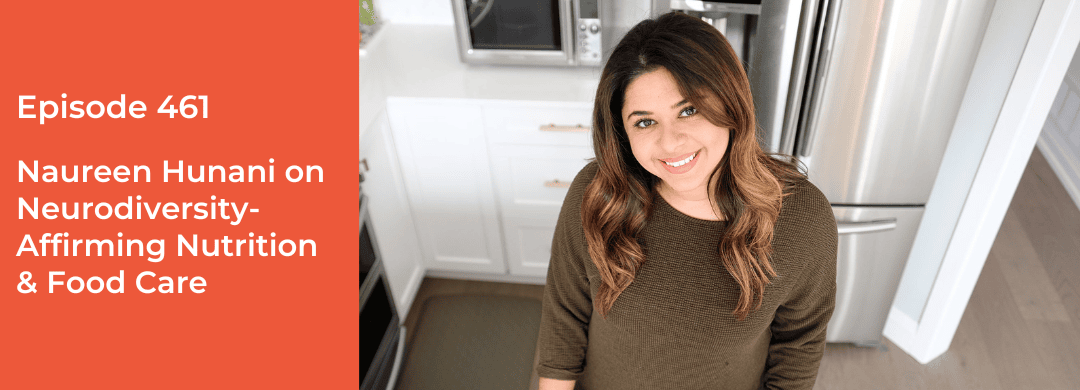
Today we’re diving into a topic that doesn’t get nearly enough attention in parenting spaces—neurodiversity-affirming nutrition. My guest is Naureen Hunani, a Montreal-based family nutritionist, pediatric dietitian, and mom of two who brings both professional expertise and lived experience to this work. Naureen is passionate about helping families create a positive, shame-free relationship with food, using a non-diet, weight-inclusive approach that focuses as much on the feeding environment and language around food as on what’s on the plate.
In our conversation, Naureen shares her personal journey and her model of neurodiversity-affirming care, which is rooted in inclusion, acceptance, and trauma-informed practices. We talk about the unique challenges neurodivergent children can face around feeding, how societal pressures can complicate the picture, and why trusting our children’s needs is such a powerful step. Naureen also debunks common myths and offers practical ways to support our kids—and ourselves—through a more compassionate, individualized approach to eating.
About Naureen Hunani
 Naureen Hunani is a Montreal-based family nutritionist, pediatric dietitian, and proud mom of two incredible children. As both a professional and a parent, she understands firsthand the challenges of feeding kids and is passionate about offering practical, easy-to-follow nutrition and feeding guidance that builds parents’ confidence rather than triggering panic, guilt, or shame.
With a deep belief that early experiences with food and the feeding environment shape lifelong eating habits, Naureen is dedicated to helping children and adults cultivate a positive relationship with food and their bodies. She takes a non-diet, weight-inclusive approach to nutrition and health, focusing not only on the food itself but also on attitudes toward food, the eating environment, and the language we use around it. She encourages investing time in meal preparation and involving children in every step—from grocery shopping to cooking.
A member of l’Ordre Professionnel des Diététistes du Québec, Naureen continually expands her expertise through seminars, workshops, and advanced courses. She also takes pride in mentoring and training other professionals in the field. When she’s not working, Naureen enjoys spending time with friends and family, listening to audiobooks, and exploring nature on long walks.
Things you’ll learn from this episode
- How Naureen’s personal parenting experiences shaped her neurodiversity-affirming approach to nutrition
- Why neurodivergent children often face hidden or misunderstood feeding challenges
- How acceptance, community, and unlearning societal pressures can support healthier family food dynamics
- Why respecting each child’s unique relationship with food is critical to avoiding harm and confusion
- How neurodiversity-affirming, anti-oppressive care benefits all children, not just those with diagnoses
- Why trusting children’s communication about their needs is essential for building positive food relationships
Resources mentioned
- A Conversation with Zoe Bisbing About ARFID and Neurodivergence (Full-Tilt Parenting)
Want to go deeper?

The Differently Wired Club is not your typical membership community.
There’s something here for everyone, whether you’re a sit back and absorb learner, a hands-on, connect and engage learner, and everything in between. Join the Differently Wired Club and get unstuck, ditch the overwhelm, and find confidence, connection, and JOY in parenting your differently wired child.
Learn more about the Differently Wired Club
Episode Transcript
Debbie
Hey Naureen, welcome to the podcast.
Naureen Hunani
Thank you so much for having me, Debbie.
Debbie
Yes, I’m really looking forward to this conversation. I was saying before I hit record that I was doing a second interview with Zoe Bisbing, who’s a nutritionist who works especially with kids who have ARFID, especially neurodivergent kids. She referred me to your work and I did a bit of a deep dive into the work that you’re doing. And I’m so excited to get to share you with my listeners and with the Tilt community. So I would love if you could kick us off by talking a little bit about your background and what led you to really focus on neurodiversity affirming nutrition.
Naureen Hunani
Yeah, so I have been practicing as a dietitian for over 18 years now. And I guess for me, like the pivotal kind of shift happened after becoming a parent and experiencing like my own challenges with feeding my kids. And it was really, really difficult for me to find support that felt affirming. I had been practicing as a dietitian for like five years at that time when I first became a mom. And I remember, you know, sharing a little bit about like what my challenges were and what was happening and just, you know, providers not understanding, not fully hearing what I was saying. And they were just all super excited to just give me this kind of script, you know, very prescriptive approach like do this and keep offering food and everything’s good and everything’s gonna be fine. And I just always left these appointments feeling really, really invalidated. And that’s when I really decided, okay, well, I need to understand this for my own family. And then I also started implementing a lot of what I was learning in my practice and with my clients and the families that I was supporting at that time.
And then, what happened was I started realizing that I wanted to have these conversations, you know, around feeding differences and neurodivergence and ARFID and all of these things. And it was just really difficult for me to even find community, right, and to speak to other providers. And that is the reason why I created RDs for Neurodiversity, a platform that is really mostly focused on neuro-affirming continuing education for providers who want to offer support that is affirming and not pathologizing. So, yeah.
Debbie
Yeah. So, and just for listeners who might not be familiar with what an RD is, can you define that for us?
Naureen Hunani
Yes, registered dietitian.
Debbie
Yeah, okay, awesome. So you know, I just even go back when you were first, you know, dealing with this as a mother and feeling invalidated. Was it a blend of your kind of intuition saying something different’s going on here mixed with your professional experience? I’m kind of curious what kind of challenges were you specifically looking to get support around?
Naureen Hunani
Yeah, so you know, it’s it’s so interesting because I think that for me, it really was like a blend of both. But I guess I’m the type of person, you know, who, who believes in listening to your like inner voice, right? So like, I remember, you know, just to give you an example back then. There were very different recommendations for introducing solids in allergens and really separating those foods and all of that. And I remember thinking back, I was like, this does not necessarily, scientifically speaking, make a lot of sense, and I did it in a very different way. And years later, recommendations completely changed. And now we no longer offer allergens that way. So I really feel like, for me, what’s always been important is to really do work that aligns with my values professionally and then my values I bring them obviously in my personal life as well, right? So I think that is where I felt like, okay, you know, lot of these people, they’re just doing all of this because it’s supposed to be like this normal thing, right? So really challenging neuro normativity and bringing in that kind of critical thinking that, just because someone’s saying it needs to look this way, or we need to do this a certain way to be normal or acceptable, like I have just been challenging that from the very beginning, you know, in my practice. And I guess it’s, I would say it’s a combination really, you know, professional, but also like my own personal values and what, you know, how they show up.
Debbie
Mm-hmm. Yeah, and I’m just wondering, you know, it’s been my kiddo just turned 21 yesterday. So it’s been a long time since I was first, you know, dealing with food. And I just remember my own issues where food were more around this idea that, you know, I was supposed to make everything from scratch. I, you know, like it had to be this kind of perfect thing. And I was really failing my child if I wasn’t providing this homemade organic food. But I’m wondering, starting from when kids are young, what are the kinds of things that you might hear from clients? What kind of challenges are people coming in with, especially your clients who are raising neurodivergent kids?
Naureen Hunani
Mm-hmm. Mm-hmm. Yeah. So, you know, I guess the first thing I want to kind of quickly talk about is that when it comes to neurodivergence, like most people will not be identified. So that’s number one. Okay. So like this idea that this only happens in autistic families or this only happens in families that have diagnosed ADHD kids, that’s not true. I think that, you know, the majority of kids that are neurodivergent will just never be identified. And we’ll still have challenges like maybe, you know, showing up at the dinner table because, you know, what everyone’s eating smells really offensive or just, you know, have a hard time sitting down and engaging in, you know, social interaction or, you know, a variety of different things, right? So I think that there can be different challenges for different people. And what I often see is, you know, that kind of that relationship between the parent and the child. Like family meals, for example, right, are highly encouraged. This is like the go-to kind of approach if you want your kids to be healthy, eat together as a family. And yes, you know, there are definitely benefits to that. And, you know, we think family meals are really hard for the kids because they have a hard time sitting down or maybe they’re, you know, they don’t like some of the foods that are being, you know, offered. But if you really zoom in and look at what’s happening for the parent, most parents are not enjoying those meals either, okay, and they’re bringing in a lot of that kind of, you know, internalized shame like, yes, I should have made these mashed potatoes from scratch, you know, I use the box ones that they’re showing up with shame, they’re showing up with guilt, they’re showing up completely and utterly exhausted, you know, because they had a tough day at work or whatever it is, right.
At the end of the day, everyone’s showing up exhausted, the child’s exhausted, the parent is exhausted, and there are all these shoulds for the parent and the child. It’s just not pleasurable for a lot of families. So, to give that permission to do what feels okay for you, it’s like, really, I can do that? I’m not a bad parent if I don’t follow this list of shoulds? Again, know, think with or without a diagnosis, challenges can show up in so many different families because there’s so much noise around food and eating and how we should be eating and what we should be feeding and all of that.
Debbie
Well, I love what you said too about neurodiversity affirming care in that specifically, yeah, most people aren’t going to be identified. I believe that as well, or maybe not for many, many years, right? And also I imagine if you have parents of younger kids coming, they wouldn’t have even maybe gone through an assessment process. But what I’m hearing you say is that it’s not that this is an approach for your neurodivergent clients. It’s the fact that being neurodivergent affirming works for everybody.
Naureen Hunani
Works for everyone, really. And I think it is respectful exactly. And you know, we all have a brain, a mind and a body. And, you know, even for neurotypical people, people who identify as neurotypical, like, they’re not all the same. Everyone has different challenges and food stories and trauma and all of that, right? So really, you know, affirming that piece, you know, someone’s body mind, it’s really for, for, for all people, right? Like you don’t need to identify in a certain way to feel seen, right?
Debbie
Yeah. I love that. That just feels like such a breath of fresh air. Yeah, So I guess in hearing your last answer, maybe just be curious to know what you would say are some of the things that can go wrong or why is it so important that we question these shoulds, that we kind of change our thinking and culture around food and feeding and eating and all of those things. You know, if we don’t do that, what can it lead to? What have you seen?
Naureen Hunani
Yeah, I mean, I think that it can lead to a lot of trauma. It can lead to a lot of inner confusion, you know, around food, eating, but also our needs and having our needs met, right? Because we eat multiple times a day, right? And so imagine a child who has differences, who needs to be fed in a different way, in a way that respects their body, their mind, and who they are, and that is not offered multiple times, right? So if we look at typical feeding patterns, there are usually three meals and some snacks, that’s like at least five to six opportunities during the day where a person feels unseen or where a child feels like they need to please their caregiver and take a bite of that broccoli or whatever it is. So over time, it leads to a lot of inner confusion, even around our own needs, our likes, dislikes, what it means to feel accepted, all of that. So it can really disrupt a person’s relationship with food and create a lot of trauma, which can create, you know, more problems later on in life as well. So, you know, it’s not uncommon for me to support children who also have parents with their feeding trauma, trying to either do things differently or unintentionally repeating a lot of those things that have happened because, you know, it’s a should or it’s a rule, right? Like it was done like this when I was young and now it’s my, you know, I don’t see any issue with that and that’s how it should be done, right? So yeah.
Debbie
Yeah, and I also think, you you talked about our kids having this relationship with food that can be complicated based on, you know, not really listening to their bodies or not learning how to trust their bodies. But I imagine that also zooms out to not being able to trust ourselves, right? Like it can lead to not kind of shutting off maybe our intuitive voice as kids if we’re told to not listen to this part. Does that bleed out into other areas? Yeah.
Naureen Hunani
100%. And it can definitely, you know, impact other areas as well, right? So when we talk about body autonomy and what it means to say no, right? And what happens when that no is not respected, right? And you know, the act of eating is a very intimate thing, right? Like you’re putting something in your mouth, you’re eating something that you don’t enjoy, that you don’t necessarily feel comfortable, or maybe you don’t even have the skill set necessarily, but you’re just doing it because it becomes an act of performance and you have to do it because, you know, this person who has more authority over you is telling you that this is what you should be doing. And it definitely, you know, I think it really compromises that piece that, you know, my body belongs to me. It’s my, you know, it’s my own, you know, and it can create other challenges for sure.
Debbie
Yeah. Yeah. And I’m wondering, you you mentioned parents having their own food issues. I think we all, especially if we haven’t examined them, we bring into adulthood and parenthood the stuff that we experience as kids for sure. And, you know, I think about food. I feel like there’s just a lot of fear surrounding food. Like it is one of those things that for whatever reason, I’d love to know your thoughts on why, but it feels like we have to get this right. Like the food piece just sparks a lot of fear and anxiety in parents. Why is that?
Naureen Hunani
I mean, the thing is if we look at it, right, like as a parent, we want our kids to grow and be healthy and consume food, right? It can be really, really anxiety provoking when your child’s not eating or is losing weight or is developing deficiencies and all of that. So I do want to, you know, I guess understand and like I want parents to kind of feel seen when it comes to that piece that yes, feeding is like a really important part of parenting like we want our kids to grow. And I think what has happened is that because of so many kind of like external messages and diet culture and like, you know, fat phobia and ableism and all of these things, you know, and this kind of excessive, like too much information, not necessarily good information out there, right? It just creates a lot of confusion and fear for parents because in, you know, in our current society, right? If a parent is not doing food right, there are a bad parent and parents internalize those ideas. And so they show up with a lot of fear and anxiety.
Debbie
I would love to talk more about what neurodiversity affirming care is. And I just want to also say that’s this idea of things being neurodiversity affirming, we’ve talked about them a lot on the show in terms of therapies and other systems maybe that parents are engaging with. You’ve been doing this for for a while, like you are in it. I feel like some people are using that language and aren’t necessarily, they’re kind of sticking that adjective on the front of a service they provide, but this is so core and foundational to the work that you’re doing. And so I’d love if you could kind of talk about your model of neurodiversity affirming care.
Naureen Hunani
Yeah, so the model that I developed is a framework based on inclusion and acceptance. And so it is an anti-oppressive methodology that is informed by social justice education. So I felt like that piece was really important and missing. So disability justice, disability studies, neurodiversity studies, and also fat studies as well because we can’t talk about food and not talk about, you know, weight stigma and fat phobia. And it’s based on five different pillars. The first one being anti-oppressive and anti-ableist. So I don’t think we can do neuro-affirming work if we’re not actively challenging neuro-normativity and ableism, especially in food and eating and how, you know, those should kind of show up and disrupt child-parent relationship and cause that rupture. The second pillar that is part of the model is leadership of those most impacted. And this is where we really look at lived experience because people with lived experience have been excluded from a lot of these studies that are neuro-normative, that focus on food and eating and doing it the right way, the quote unquote normal way.
The third pillar is acceptance based. So really focusing on how some of these challenges that we see, I mean, all of these challenges are very real and we are not going to pathologize them, right? We’re going to take an acceptance based approach, which means that we take a strength-based approach. So we’re not approaching feeding and eating as something that needs to be fixed, but accommodated. Like how do we accommodate the person that’s in front of us and how do we create environments where they can really learn to grow and nourish in a way that works for them, right? Trauma informed is another pillar. So really looking at how trauma shows up. And then the last one is body, mind liberation. So we are not just focusing on just the mind, you know, or the brain. We’re really looking at the full person and really applying an intersectional approach to food and eating.
Debbie
I think that one of the things that jumped out at me in that conversation I had with Zoe Bisping about ARFID too, is this idea that what you just said too, it’s not about fixing. It’s not about, this is a problem that we need to find the solution that will work for us, is that acceptance piece is so important. And I think there’s probably a lot of discomfort in that piece for a lot of clients. How do you work through that acceptance and get parents to kind of start letting go of the voices or the judgment or the things that they might be really coming up against?
Naureen Hunani
I think that when we talk about acceptance, we have to also talk about the grief sometimes that comes up for people. And it can be really complicated. And I want to validate that because sometimes we have these ideas around like what food will look like, what parenting will look like, what eating will look like. Like I have so many parents who show up and they’re, you know, crying because they’re, they identify as foodies and their kid will eat like 10 foods. And that’s, that’s like, you know, something that’s really special to them. Like this is the way I wanted to bond with my child. And it’s like, yes, you know, we can have these ideas in terms of what connection and bonding can look like. And at the same time, when we talk about connection and bonding, it’s not a one sided thing. Like we also have to see what’s happening in the other person. Like you need attunement for that.
So we can’t show up with our preconceived notions and what we think that might look like. It really is about like resonating, you know, and sitting down and like kind of figuring out what the person in front of me also wants and what makes them happy and feel loved and safe and all of that stuff. Right. So I think that it’s a journey. I think there’s a lot of unlearning that needs to happen. I think that there’s a lot of work around fear and shame that is typically done. And I think at the end of the day, parents want their kids to be nourished and we can still talk about nourishment without talking about these shoulds. And it’s really looking at feeding from a very, very different, very, you know, radically different perspective. Yeah.
Debbie
What I’m hearing from you is that, you know, these are ways that we often approach behavior, right? We want to be really attuned to our child’s behavior. And that seems to be easier. Food always seems to be something over here, right? It’s a physical need and we may not lump it in with that same lens. So I really appreciate you just saying we need to attune in that exact same way to how our, to our kids’ relationship with nutrition and what’s coming up for us. So we’ve talked about some of the shoulds, about what this should look like or family meals. I think that is something that I came to peace with a long time ago that like family dinners are going to look very different than they did on, you know, the sitcoms that I watched growing up. What are some of the other kind of myths or misconceptions that you hear about when it comes to parents of neurodivergent kids that you have to kind of re-educate or push on?
Naureen Hunani
Yeah, I guess one big one is, well, if you want them to eat a certain food, just eat it in front of them, like just model like this eating and it’s going to happen automatically. And, you know, that can really, really backfire for a lot of kids who have aversions to certain foods and just, you know, a person eating something really kind of aversive in front of you is not necessarily going to make you want to eat that food. So that’s definitely like a big one where, you know, parents are often told, okay, well, you know, if you want them to eat this food, just eat it in front of them and just tell them how delicious it is and if they’re going to love, they’re going to automatically eat that, you know, so that’s big, a big one.
The other, I guess, thing for me, that comes up often in my practice is the idea of social eating. Right, so that eating has to look social, that you have to sit down and talk about how your day went. And again, bringing in lot of these kind of neurotypical ways of socializing and how exhausting that is, especially at the end of the day. When you ask kids, was your day? they’re like, good or bad? And they just don’t want to talk, right? Sometimes they just want to do their thing. And it’s like, tell me more, tell me more. And it’s like, well, I’m just trying to focus on what’s in front of me right now and I’m just trying to eat and it’s really difficult for some kids to engage in social interaction and then also engage in eating. That can be quite challenging. So that’s another one, I guess. And then this idea also that the food or eating pattern has to look a certain way in terms of meals and schedule.
Debbie
Mm-hmm. Yeah. I’m, I’m just wondering in terms of, so, you know, thinking about a lot of our kids have food, sensory issues, right? So I imagine that’s a big piece. I’m wondering what kind of challenges, feeding challenges do you, most work with is, know, we talked about RFID briefly and maybe we can talk about that a little bit in case listeners haven’t heard that episode and they don’t know what that means. but what are some of the biggest challenges that would require a parent to kind of be like, okay, need, there’s something going on here, but I want to approach it in a way that is neurodiversity affirming, and I want to support my child in being nourished. But what are some of those issues?
Naureen Hunani
Honestly, feel like when a parent feels like something’s not right, they need to get support. Like, I feel like that is, you know, because, and it’s so interesting because sometimes what happens is that if you see a provider that is not affirming, they might look at you, right? Like, and tell you, well, your child is growing fine. Yes, they’re eating whatever, 15 foods, but they’re healthy and everything’s okay. And this is where I feel, you know, a lot of problems and lot of kind of challenges can happen because parents still feel, leave the office feeling so invalidated and they’re so confused because, well, yes, the child could be growing fine, but they can still have issues when it comes to feeding and eating and all of that. So I think if, as a parent, like if you are stressed, if you feel confused, if you feel like maybe something is off, if you’re exhausted and need support because it is very exhausting when you know when we have kids who have differences and navigating all of that in school and daycare at home can be quite challenging. It can be right like I don’t want to invalidate that. So if you feel like you need support go for it right.
Debbie Reber
Yeah, I love that answer. So what about, I hear this from parents a lot, kids who have very limited diets, right? And that seems to be pretty common among neurodivergent kids. It’s like only eating the brown foods or only eating fries and chicken nuggets. We certainly went through a very limited diet stage when my kiddo was younger. And I was like, I’ve got bigger fish to fry right now. I’m not going to get into any conflict about food. But I’m wondering, what would you say to parents? Is it a problem if parents have kids who do have a pretty limited, or does it just depend on?
Naureen Hunani
Yeah. Yeah, I think it’s a problem if it’s creating stress, right? Like, think that’s like the first thing. There are families I’ve worked with that have kids that are eating like 10 to 15 foods, and it was a problem. And now it’s no longer a problem, right? And the child’s eating hasn’t changed much. But you know, we do a full nutritional assessment and we see while they’re still able to get in all the nutrients they need. You know, if you’re eating bread or pasta, they’re pretty much very similar in terms of nutrient content. Your body doesn’t, you know, I say this often, like your body doesn’t need recipes, it needs nutrients. So if those nutrients come from one recipe, that’s okay too. And then there are kids who have very limited diets where they need more support. They might need supplements. They might, some kids might need tube feeding. You know, every child is different, but typically, you know, even with a limited diet, kids are still able to meet their needs. A lot of kids are. We still have to do work around, you know, how frequently we’re offering these foods or, know, what their day looks like and all of that. But this idea that, if a child is only eating X amount of foods, they need to expand like immediately or else something terrible is going to happen is really problematic. And that’s what creates a lot of this fear and pressure.
Debbie
Yeah. So what then, I would love to hear what you would describe as the goal. Like if we zoom out, I’m always thinking about what are we working towards? So if we think about kids who maybe that you’re working with or parents who have kids who have challenges or stressors around food, you know, zooming into the future 10, 15 years, what are we working towards? What do we hope for?
Naureen Hunani
Yeah, we, I mean, my hope is always to support families in a way where they can experience less stress, right? Show up in a more authentic way, right? Like even those parents who identify as foodies, like I don’t want them to not eat the food they like, right? Like they can still eat that food and offer what the child can accept, right? Like those two things can happen, right? They can exist. So it’s really about, you know, finding joy, finding pleasure in food, connection in a way that works for that person’s body-mind, right? And really supporting children so they can develop a healthy relationship with food and can also advocate for themselves, right? So removing shame from having these feeding differences or ARFID right? To be able to really understand their inner experience without shame and guilt and to feel like they have a voice, right? I think to me that is so important and it’s so needed.
Debbie
So before we wrap up, I’m just kind of curious because you are, you know, very visible in this space. You’ve created your RDs for neurodiversity and I see you as an advocate. I’m curious to know kind of what you experience in the space that you are moving through. Like is there an openness to your message? Do you find a lot of resistance in the medical community? What do you find?
Naureen Hunani
Yeah, that’s such an interesting question. Thank you so much for asking. You know, my journey has, it looked a certain way in the beginning and I feel like where I am now, it’s very different. Like I started the platform a few years ago. And there can be a lot of resistance, there still is, but I’ve created this of this bubble, you know, where I’m like inviting people, hey, like you want to hang out and have these really important conversations, right? Because it’s not necessarily safe out there. It’s not. That’s the truth, right? If you’re working in a practice where you’re working with other providers, they may take a very different approach. It can be really, really lonely and isolating. What I find is that the people that I work with are usually lot more open than healthcare providers who take a more mainstream type of approach where they’re very much focused on using frameworks that exclude lived experience, right? Because they really hold on to these kind of modalities. And I feel like that is where I see a lot more resistance. Yeah, but parents, feel like they’re just many of them, you know, often are just so happy to they feel relief. There is like this, sense of relief, like, okay, I can do this.
Debbie
Yeah. Yeah, I mean, and that’s when I think it’s really about access. I’m always thinking about this question of like when people find tilt or other, you know, people in this space who are trying to share a strength based approach to raising these kids, which is focused on accepting and seeing who they are as as individuals and not problems need a fixing. It’s such a relief in the same way. And I’m always thinking about how do we how do we make sure that the people who are new to this journey find us? Because I imagine you get clients, sorry, I’m going down another road, but I’m just curious. I imagine you get clients who, or you work with families who have gone down a much more pathologizing route and then it’s kind of having to unpack, right?
Naureen Hunani
Usually I’m not the first provider they see. They’re able to find me and I’m glad they are. But yeah, it takes time. And I think that what’s really beautiful is as much as we pathologize and we’re just like, social media is not the best. I think that’s where a lot of people find their community and feel like, finally I feel seen and my voice matters. So I think that community piece is really, important and it’s becoming more accessible because so many people have access to the internet and social media and can actually, for the first time, talk to people who have similar experiences and that is so, so valuable.
Debbie
I absolutely agree. So, okay, before we wrap up then, I’m just wondering, I hate to put you on the spot, like what’s what nugget, but if there are parents listening to this conversation who recognize, you know, we definitely have some food challenges or that parent has that intuitive hit that like something’s not right here, what would you encourage them to do or to be thinking about after listening to this episode?
Naureen Hunani
I guess for me, because as you were speaking, I’m like, hmm, this is a difficult question. But then right away, I’m like, no, for me, it’s so obvious. It’s really trust your child, the person in front of you, your child. And behavior is a form of communication, right? So like them saying no to something, that’s just them telling you what’s happening in their bodies. So really paying attention to that.
Debbie
Yeah, I love that. Yeah. Always coming back to trusting ourselves, right? And trusting our kids and attuning to them, getting to know who they are and what they need. Awesome. So would you share with listeners where they can connect with you? are there any, you mentioned social media, do you have a presence there where they can be following you?
Naureen Hunani
Yeah, absolutely. So people can connect through the website rds4neurodiversity.com and I’m also on Facebook and Instagram, rds4neurodiversity.
Debbie
Awesome. Okay. Well, listeners, as always, I will have links in the show notes for this episode. I’ll have links to my other conversations that we’ve done on ARFID and nutrition as well. Also, this is going to be on the YouTube channel. So if you want to see us, you can check out the Full Tilt Parenting on YouTube channel as well. And Naureen, I just want to say thank you. I really appreciate you making the time. I know you’re super busy. It’s also August and it’s such a hard time to connect with people. And I so appreciate you making the time to chat with me today.
Naureen Hunani
Yeah, thank you so much for inviting me.
Do you have an idea for an upcoming episode? Please share your idea in my Suggestion Box.